Persian Dessert To Indian Favourite: Gulab Jamun Origin Revealed
Persian Dessert To Indian Favourite: Gulab Jamun Origin Revealed
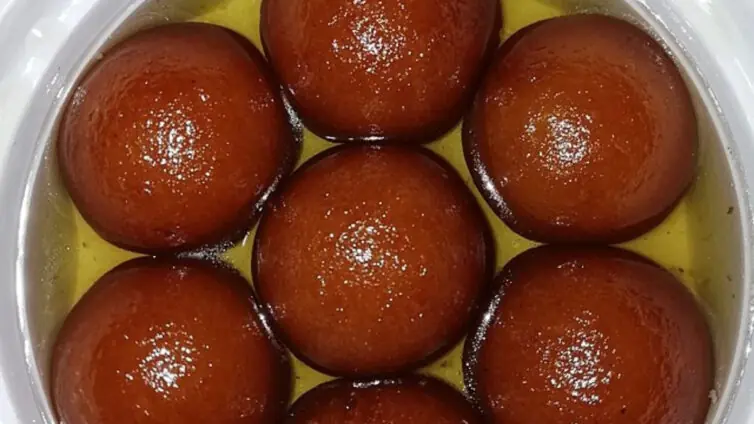


Gulab jamun, the round, deep-fried balls of khoya dipped in sugar syrup or wrapped in sugar crystals are a favoured desi treat around the Indian subcontinent. The history of the gulab jamun’s origin is as dense as its sweet flavour. A traditional sweets lover fond of investigating culinary histories would be intrigued to know that gulab jamuns can be traced as far back as the medieval ages.
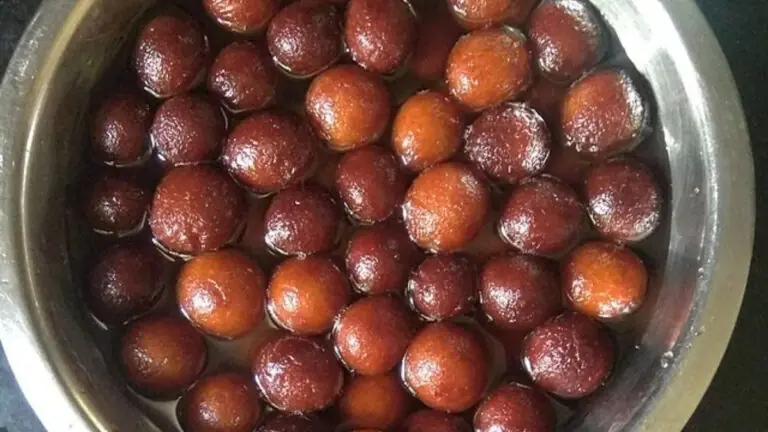
All over the Indian subcontinent, if there is one sweet treat that is sought after for its decadent flavour and dense quality, it is the gulab jamun. Deep-fried balls of khoya are soaked in sugar syrup or are lathered in sweet sugar granules to make gulab jamuns. The khoya balls are first fried in a kadai and once they turn golden-brown, they are transferred into another vessel containing a thick sugar syrup. The syrup is most often than not laced with saffron and some cardamom and the gulab jamuns soak up all these flavours to become quite luxurious and aromatic treats.
Whatever the festival or celebratory occasion, gulab jamuns rank high as sweet treats that are sheer crowd-favourites. In fact, over time, gulab jamuns and their enduring popularity has also spread to other regions like Nepal, Myanmar and Bangladesh, where it continues to remain a beloved dessert. Yet, the traditional sweets lover who deep dives into culinary histories will discover that gulab jamun origins are hardly Indian. In fact, gulab jamuns came to Indian kitchens from Persian regions sometime in the medieval ages.
Gulab Jamun’s Persian Origins
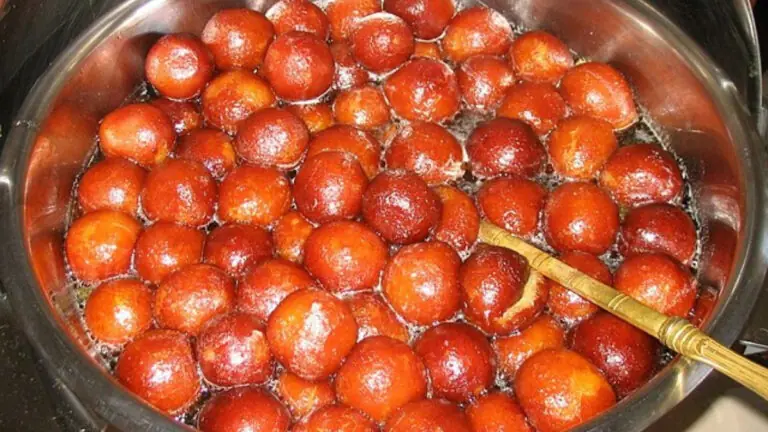
While the gulab jamun that we know and love today has its roots in Indian soil, it is actually a dessert derived from a Persian sweet known as Luqmat-al-Qadi which roughly translates into judge’s morsels. In its most rudimentary form, this sweet prepared in Persian provinces was nothing but fried dough balls soaked in honey or sugar syrup. This is quite similar to the process of making gulab jamun which involves the deep-frying of khoya in a deep kadai followed by the syrup immersion in a separate pot. Another theory suggests that during the Mughal period, gulab jamun was accidentally prepared by a chef in the emperor’s kitchen, however there is scant evidence which supports this premise.
Gulab Jamun Comes To Indian Soil
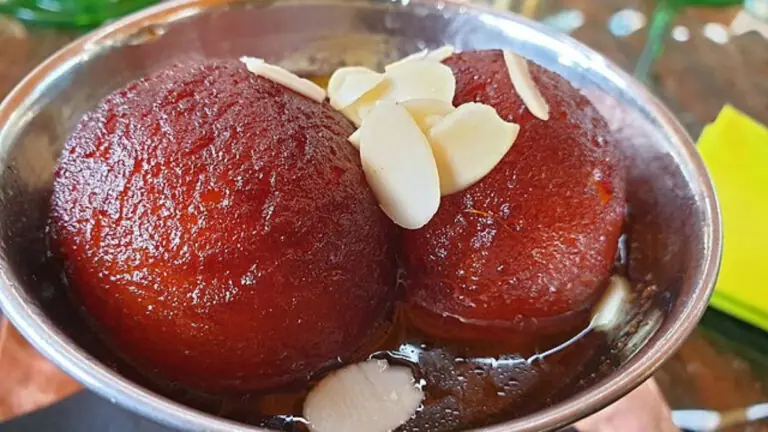
Eventually, with the entry of the Mughal rulers into the Indian subcontinent, a lot of transformations occurred in Indian kitchens. Cooking techniques and culinary practices were revised and refined to suit the cosmopolitan palate of Mughal and Turkish rulers coupled with the already existing Indian native tastes.
The gulab jamun is a product of this cultural exchange wherein the process of deep-frying the dough balls and then soaking them in the syrup was a concept incorporated by Indian cooks, laying the foundation of the modern gulab jamun.
The Dessert’s Etymology
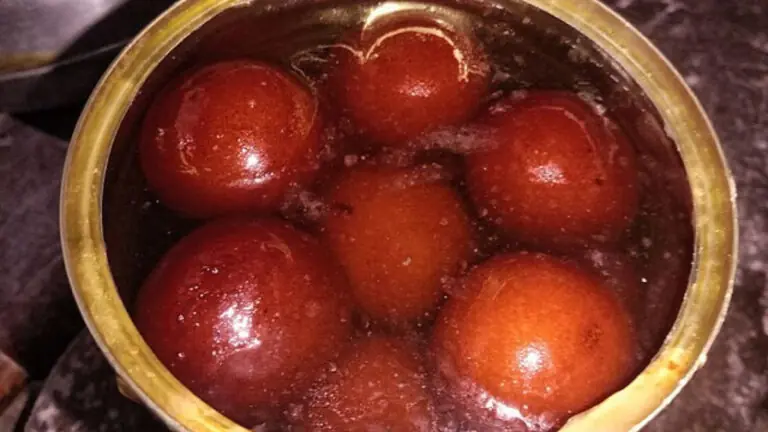
But before diving into gulab jamun’s development in India, it is interesting to note how it derives its name. The word gulab is derived from the Persian words ‘gol’ and ‘ab’ both of which mean flower and water respectively. This is a reference to the rosewater-scented sugar syrup used for dipping the dough balls. The word jamun, for its part, comes from the Hindi-Urdu word for this purple-hued, dark black plum whose colour, shape and size resembles that of the fried gulab jamun. Today, this deep-coloured dessert is also found in several sweet shops across the subcontinent, but there remains a subtle distinction between the gulab jamun and the kala jamun all the same.
Gulab Jamun Origin
The transformation of this dessert from the Persian treat to the much-known gulab jamun of today began in the royal kitchens of the Mughal period. As chefs began experimenting with locally-available ingredients, khoya or reduced milk solids began to take centre stage in the making of gulab jamuns. This could also be an interesting input from Indian kitchens which often used these milk-based solids to prepare numerous sweet treats. Eventually, royal kitchens turned to khoya for making the gulab jamuns too, altogether bringing about this shift from flour-based dough to a richer, more decadent milk or khoya-based dough.
Next came the sugar syrup immersion and the rosewater infusion, which retained its essence except with the inclusion of spices like saffron. The milk-based balls, fried in hot oil, began to be immersed in the syrup to craft the gulab jamuns we recognise today.
Regional Variations
But this is hardly where the story of the gulab jamun origins stops. In fact, as is the case with so many other recipes carrying rich legacies, gulab jamun too was quickly adopted by different regions in ways that were most attuned to their geographical locations and culinary preferences.
While many parts of northern India continue to boast of the gulab jamuns in their most traditional sense, others have infused into them subtle ingredient shifts. The gulab jamuns in West Bengal for instance, often go by the name pantua that are slightly denser and often include some chenna or hung curd in the recipe along with the classic khoya. In southern parts of the Indian subcontinent, gulab jamun khoya is most often than not flavoured with green cardamom which brings that distinct spiced, aromatic touch into its recipe. Then there are the more modern variations which involve making mini gulab jamuns or little bite-sized pieces of this dessert, served warm, with a scoop of chilled vanilla ice cream.
Whether it is the bread gulab jamun, the stuffed gulab jamun or even the most recent trend of preparing baked gulab jamuns in the oven or air fryer that cut out the deep-frying process, the sweet treat remains one of the most beloved options in the roster of traditional Indian desserts. Its enduring popularity is but a testament to how much the dessert has retained its essence at its core, despite recipe shifts. Simple ingredients, soft textures and balanced flavours contribute to the the luxurious popularity that gulab jamuns enjoy right from times of royalty, well into our modern kitchens.