Dussehra 2025: 5 Mithais That Mark Vijayadashami Celebrations
Dussehra 2025: 5 Mithais That Mark Vijayadashami Celebrations


Dussehra or Vijayadashami is celebrated with devotion, prayers, and food. The day carries old customs and sweets become the natural way of offering blessings and joy.
Dussehra is one of those festivals in India that always brings people together. It marks the victory of Lord Rama over Ravana, and also the triumph of Goddess Durga over Mahishasura. In both stories, good wins over evil, and the festival reminds people of courage, righteousness, and balance. But it is not only the rituals or the effigy burning that make the day significant, it is also what happens in homes and kitchens. Families prepare special foods, and mithais take a very central place. They are not only served as dessert after a meal but are first offered in prayer, and then distributed to guests, neighbours, and sometimes even to strangers. A sweet shared is seen as a blessing passed on. The ingredients themselves are chosen carefully. Milk, rice, lentils, ghee, jaggery, and nuts are tied to purity and prosperity. Many of these sweets are linked directly to Dussehra and are repeated every year because they have become tradition.
The interesting part is how different regions keep their own practices alive. In some places jalebi is eaten early in the morning with milk, in others payasam is prepared as part of puja, while in Maharashtra puran poli is not skipped at all. The choice of mithai might change from state to state, but the meaning remains the same, to celebrate victory, to give thanks, and to begin new things with sweetness.
1. Jalebi
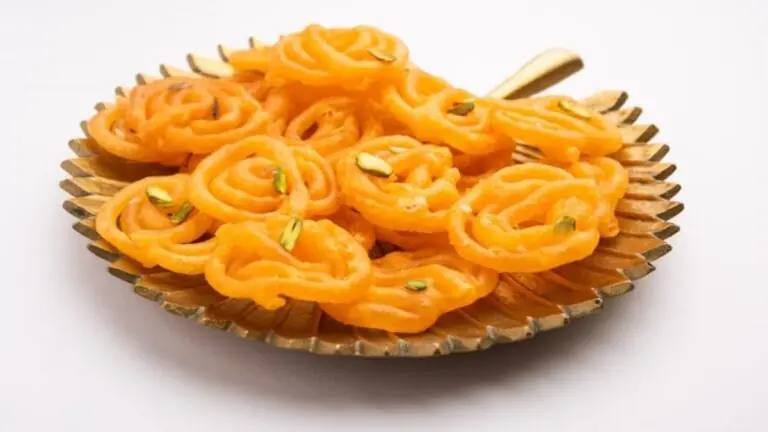
Jalebi has a very strong association with Vijayadashami. In cities like Varanasi, Kanpur, and Bhopal, you will notice people queuing outside sweet shops early in the morning to take home jalebi for breakfast. It is eaten with milk or curd, and this custom is believed to invite prosperity. The batter is fermented, which gives the sweet its slightly tangy flavour, then piped into hot oil and dipped in saffron-scented sugar syrup.
Jalebi is not only about taste but also about its symbolism. Its golden rings are seen as a mark of continuity and growth. In many temples, jalebi is distributed as prasad after Ramlila performances. Children especially wait for it, but elders too see it as an auspicious start to the day. What is striking is that while the process looks simple, making perfect jalebi at home actually needs patience and practice. This is why during Dussehra most families buy them fresh from trusted shops, because the flavour and texture must be right to feel festive.
2. Barfi
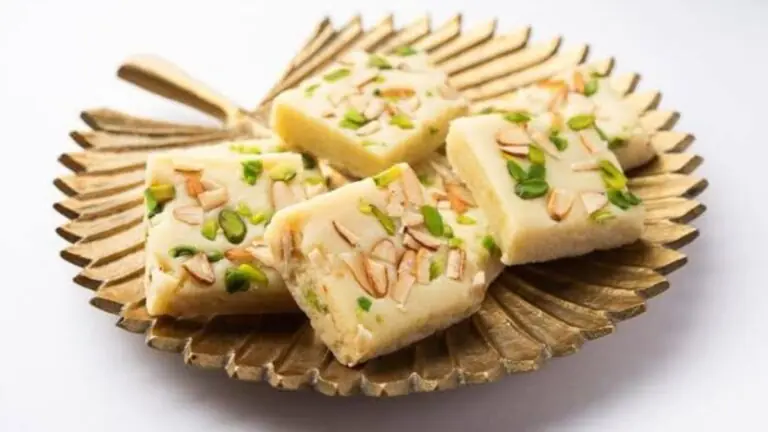
Barfi has always been a festival favourite, and on Dussehra it becomes part of almost every household. Its appeal lies in the fact that it can be prepared in advance and lasts for days, so it is convenient for gifting and for serving to visitors. The base is usually made of milk and sugar, but the flavouring depends on family habits. Some use cardamom and saffron, while others prefer dry fruits and nuts. Kaju katli is particularly popular during Vijayadashami, as are pista and coconut barfi.
What makes barfi festive is not only its taste but also how it is presented. Diamond shapes neatly cut and covered with silver vark become almost a symbol of celebration. In Gujarat and Maharashtra, shops sell boxes filled with mixed barfi and these are bought as gifts for friends and relatives. For hosts, serving barfi means they are offering something refined and traditional, something that speaks of care. The mithai is simple in method but elegant in outcome, which is why it has stayed as a mainstay of Vijayadashami for so long.
3. Payasam
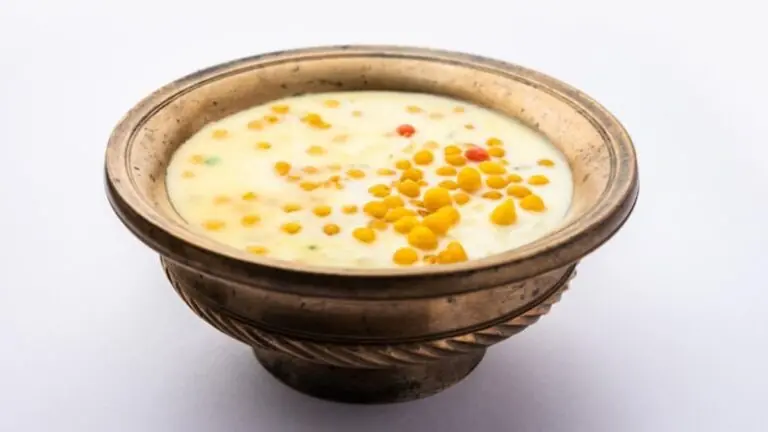
In southern India, no Dussehra is complete without payasam. Families prepare rice payasam, moong dal payasam, or vermicelli payasam, each one cooked slowly in milk with ghee, jaggery, and nuts. The fragrance of cardamom and the richness of cashews fried in ghee make it unmistakably festive.
The dish also has a direct role in rituals. In Kerala, Vijayadashami is the day of Vidyarambham, where children are introduced to letters and learning. Payasam becomes the sweet offering for this ceremony, symbolising knowledge and blessing. In temples, brass vessels filled with payasam are offered to deities and then distributed as prasadam. Families take it as a sign of divine grace.
The dish is rich yet humble, and because it is tied so closely to puja and sacred practice, it is never left out. Even families that do not prepare elaborate meals will make some version of payasam on the day, because it is seen as a way of completing the ritual of Dussehra.
4. Ladoo
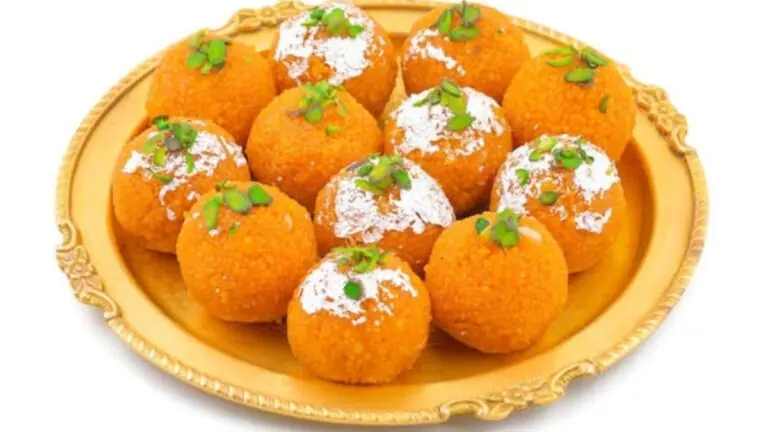
Ladoos are among the most recognisable Indian sweets, and they are firmly connected with Dussehra. In many places, motichoor ladoos are made in large sizes and offered in temples. Families usually prepare smaller ladoos at home, with besan, boondi, or coconut. Their round form is believed to stand for wholeness and completion, which suits a festival that is about victory and fulfilment.
In northern states, after the effigy burning, ladoos are distributed freely among communities. Children receive them in paper packets, neighbours exchange them, and guests are welcomed with them. Because ladoos are easy to prepare in advance and can last for days, they stay in homes even after the festival is over, served with tea to visitors. This makes them practical, but also significant as they extend the feeling of celebration.
Making ladoos at home is also something that binds families. The roasting of besan in ghee, the shaping of warm mixture into spheres, all become collective tasks, especially when done in larger quantities. This shared labour gives ladoos an added meaning, that of community within the home itself.
5. Puran Poli
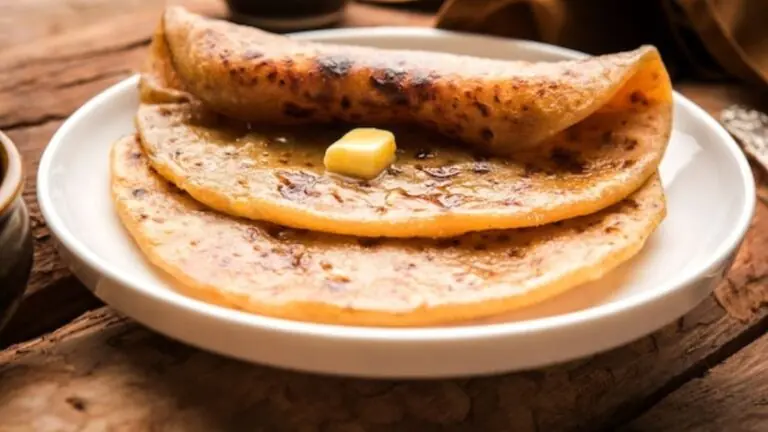
In Maharashtra and Karnataka, puran poli is essential for Dussehra. It is often described as a sweet flatbread, but it holds more value than a simple recipe. The filling of chana dal, jaggery, cardamom, and nutmeg gives it richness, while the outer layer of dough cooked on the tawa with ghee turns it into something festive and complete.
Preparing puran poli is not quick, and perhaps that is why it is given such respect. Families spend hours soaking, boiling, and blending the dal, melting the jaggery, and carefully rolling the dough so it does not break. Children are often told that this is a dish that needs patience, which is why it is linked with celebrations where effort and care are expected. On Vijayadashami, puran poli is not only food but also a reminder of tradition.
It is served with ghee, sometimes with a little milk, and is seen as nourishing as well as sweet. For families in these regions, Dussehra without puran poli would feel incomplete. It is both comfort and ceremony on a plate.