Why Your Dosa Doesn’t Brown: Pan Temperature Explained
Why Your Dosa Doesn’t Brown: Pan Temperature Explained
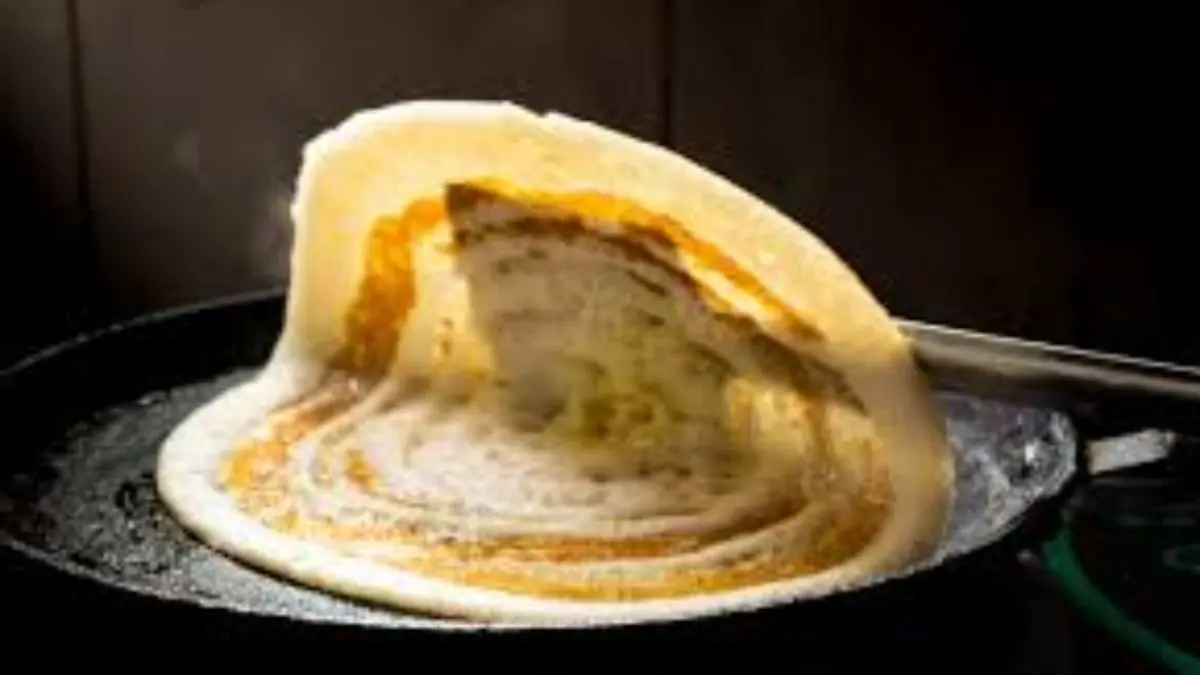


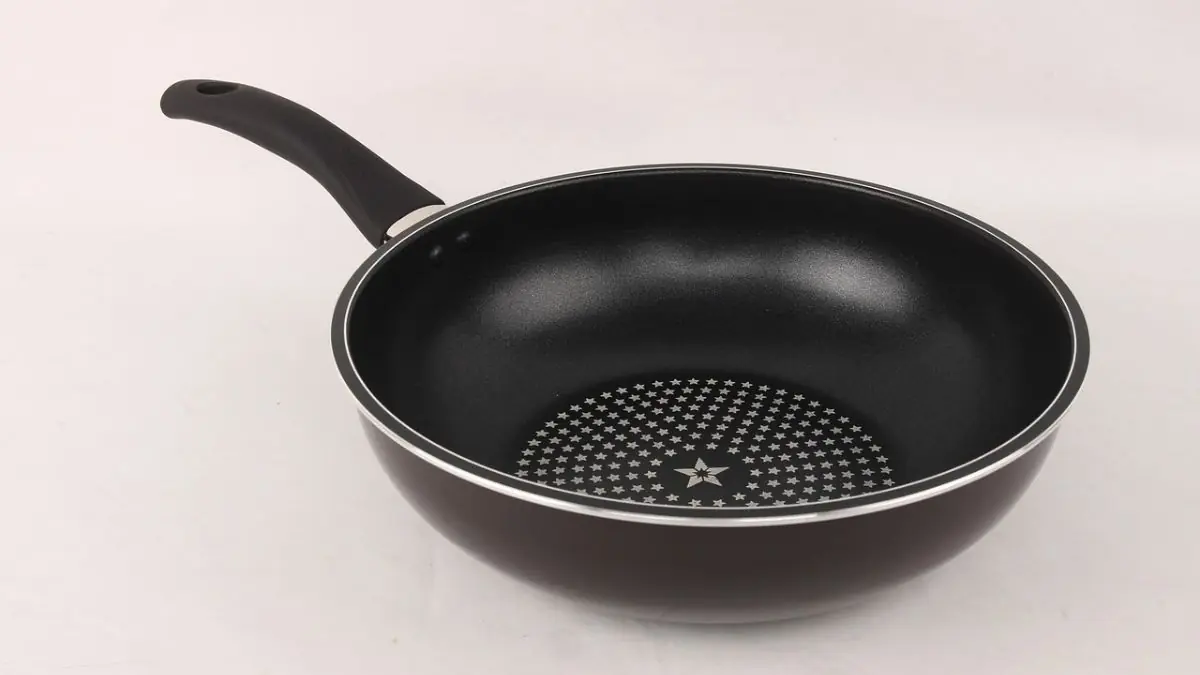
The best and most effective choice for making dosa is using a proper pan or tawa. Dosa is typically prepared using high heat. Using them will help you avoid external damage, and you will get that golden brown colour you’re looking for.
Everybody likes eating dosa because it has a great flavour. Both morning breakfast and nighttime munchies are best served with it. Dosas paired with a variety of chutneys and hot sambar are unbeatable. For this reason, a proper pan or tawa or dosa tawa is required if you want to prepare and eat dosa at home. How to choose a dosa for your kitchen will be explained in this article. This is where a well-designed pan or tawa can help. A decent dosa pan and tawa will make it easier for you to make delicious dosas every day and give them to your family and friends. However, selecting one in the Indian market is not particularly straightforward. There are many choices, so you must select a model that matches your preferences.
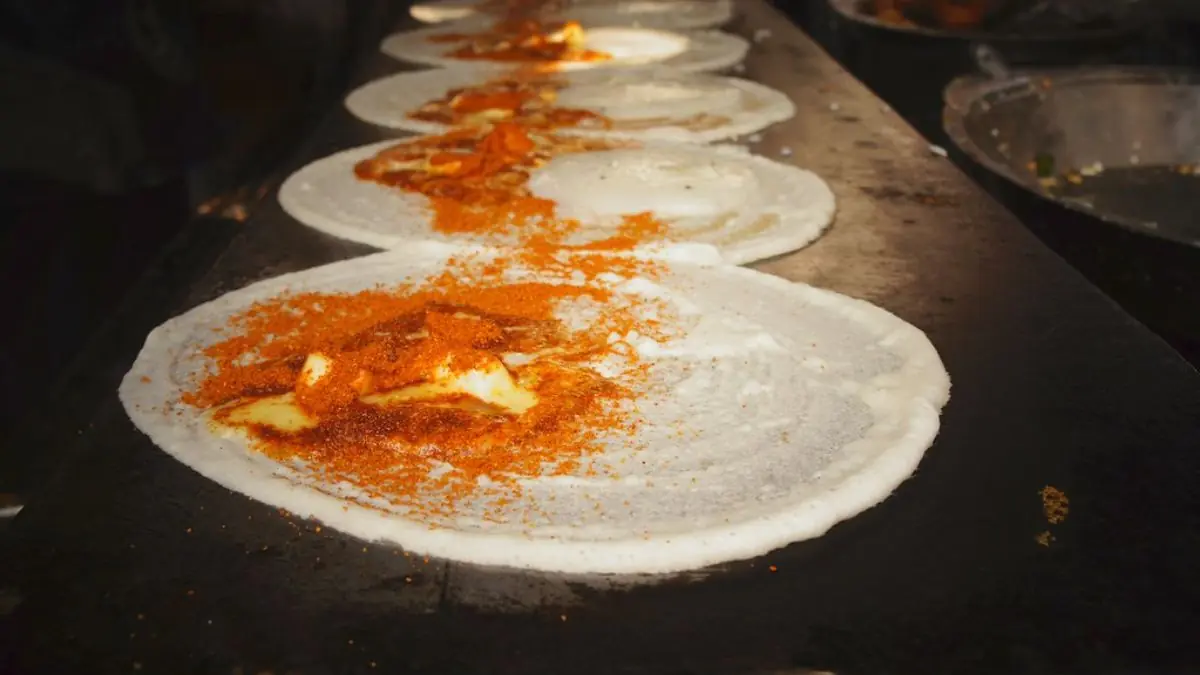
Anyone who has tried home-cooked dosas knows why they are simply superior. The freshness comes first. When you prepare dosas at home, the pan is hot, the batter is perfectly fermented, and the dosa is delivered immediately to your dish. It’s still warm without being covered in foil or placed under a heat lamp; it’s crunchy on the outside and mushy in the centre. Secondly, everything is under your control. You can use as little or as much oil or ghee as you desire, modify the fermentation, and select high-quality rice and dal. This makes home dosas lighter, healthier, and easier to digest than many restaurant versions.
The comfort factor comes next. The process of spreading dosa batter in circles, the sound of it sizzling on the tawa, and the aroma of it frying are all comforting and familiar. Food is what ties you to your routine, your family, and your kitchen.
Lastly, homemade dosas are prepared to order. You can make them thick, thin, plain, or stuffed, and pair them with chutney, sambar, podi, or leftovers from the fridge. They’re simple, flexible, and always satisfying, which is exactly why home-cooked dosas hit different. How well a dosa browns is largely dependent on the pan or tawa you use. Heat is what causes browning, and the proper pan helps distribute the heat uniformly over the surface. If the pan heats unevenly, some parts of the dosa stay pale while others burn. A proper tawa ensures that the dosa cooks uniformly from the centre to the edges.
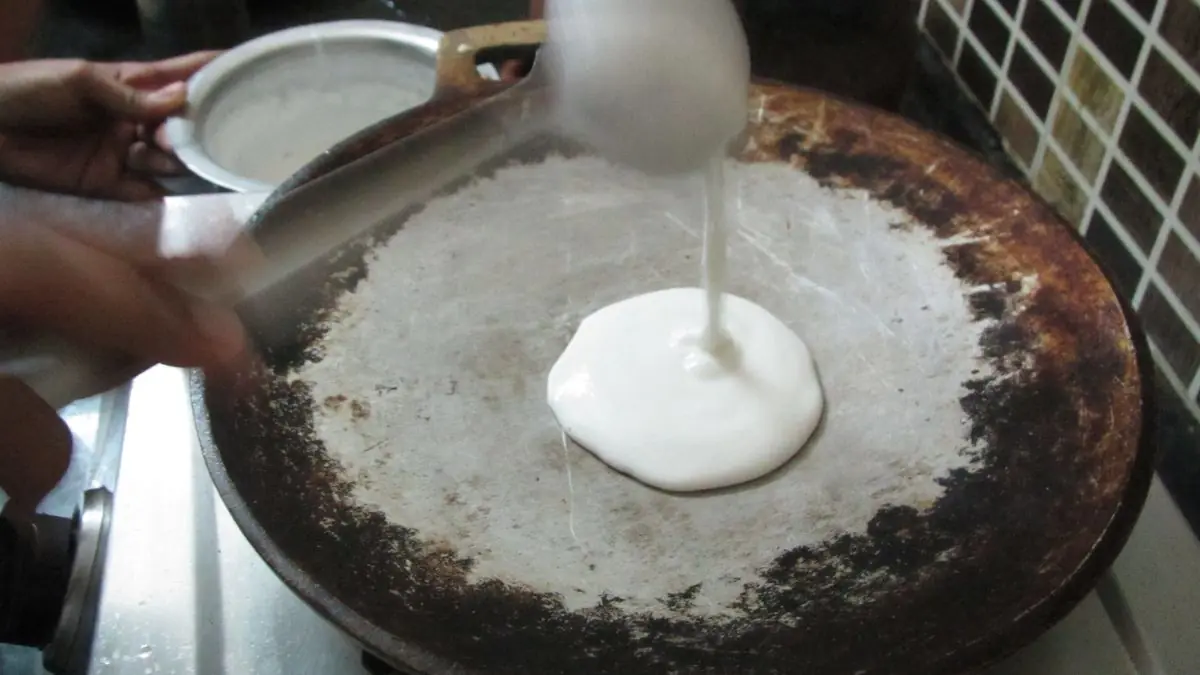
Material is important as well. Heat is retained by cast iron and heavy iron tawas, thus once heated, they remain heated. This steady heat helps the dosa develop that golden-brown colour and crisp texture. Non-stick pans heat faster, but they often lose heat quickly, which can make the dosa softer and less evenly browned. Thickness is another factor. A thick, heavy pan doesn’t cool down when you pour the batter on it. Thin pans lose heat instantly, which slows down browning and can make the dosa stick or turn rubbery. Browning is influenced by even the pan’s surface. Tiny holes made by a well-seasoned tawa aid in the batter’s optimal cooking and moisture release. As a result, the dosa can crisp up rather than steam. All of which are key to getting a perfectly browned dosa.
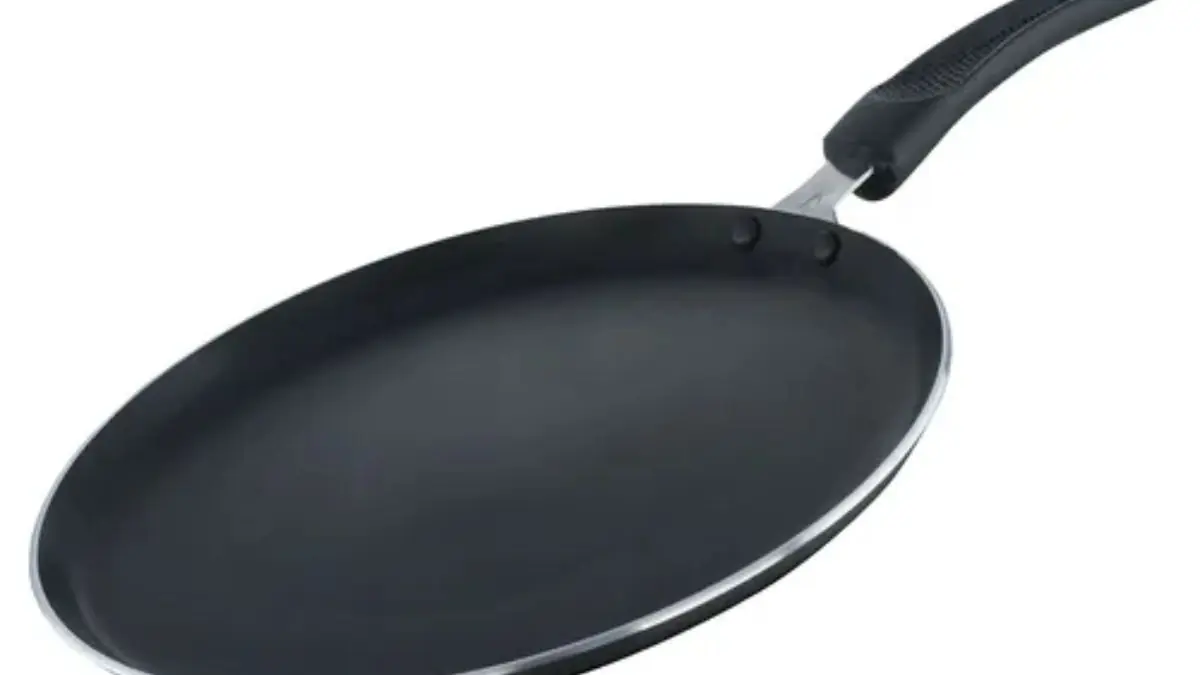
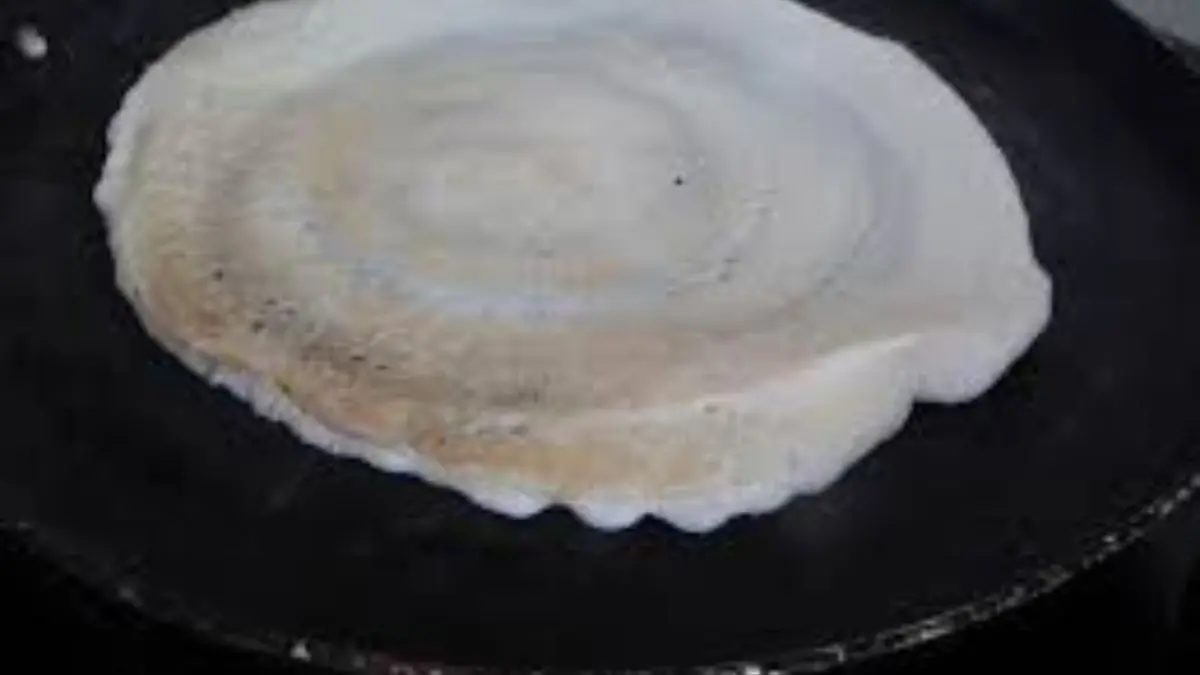
It takes more than just the batter to achieve a flawlessly browned dosa; cooking methods and the way the pan temperature interacts with the batter are also important. Many things happen at once when dosa batter comes into contact with a heated pan. The natural sugars in the rice gradually caramelise, the starches begin to cook, and the water in the batter starts to evaporate. This is the reason for the crispy texture and golden-brown tint. The most crucial element is pan temperature. The batter will spread but not sizzle if the pan is too cold. The dosa will cook slowly and become pale, mushy, and a little rubbery instead of browning. This occurs as a result of insufficient heat to rapidly evaporate moisture. The dosa ends up steaming instead of crisping.
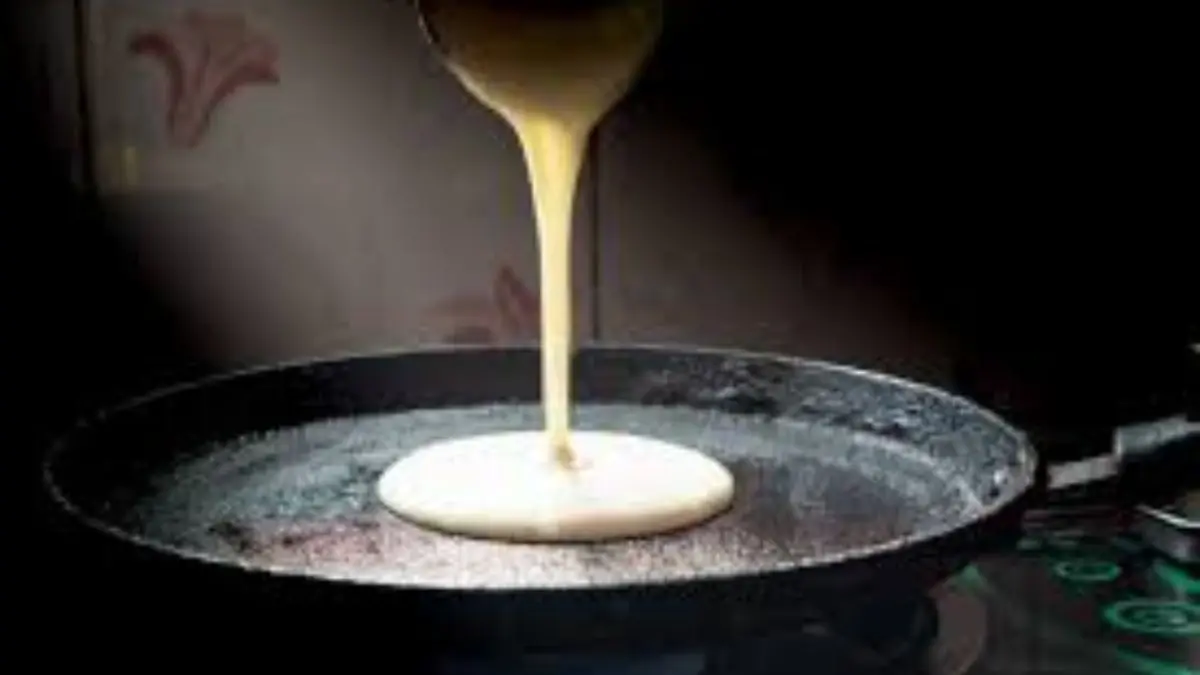
The opposite issue arises if the pan is overheated. As soon as the batter touches the surface, it burns. The dosa remains raw on the inside but browns too quickly on the outside. You can notice uneven cooking, black blotches, and a bitter taste. For this reason, the ideal heat is between medium and medium-high, hot enough to sizzle but not so hot that it burns.
As you spread the batter, you hear a soft sizzling sound when the temperature is just right. This indicates that the moisture evaporation rate is appropriate. The batter’s surface dries out as the water evaporates, facilitating browning reactions. The Maillard process, as mentioned in a paper published by the National Institutes Of Health in 2015, occurs when heat interacts with the batter’s sugars and proteins, giving the dosa its colour, flavour, and scent.
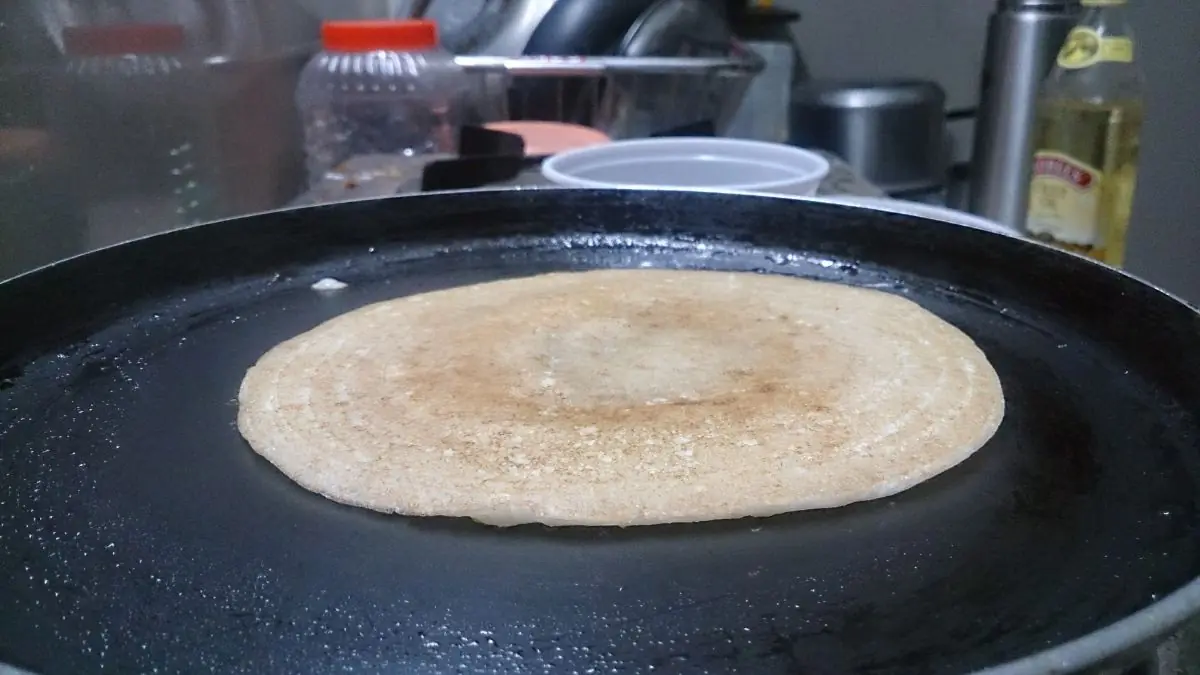
Ghee or oil also has a direct effect. A small amount of fat around the edges aids in heat conduction and keeps things from sticking. Additionally, fat aids in a minor surface fry, which improves colour and crispness. However, too much oil might slow down browning and make the dosa oily. Even downtime is important. The bottom of the dosa will appropriately brown if it is cooked undisturbed for one minute. The browning process is disrupted if you continue to lift or flip too soon.
Pan temperature, moisture content, thickness, and duration must all be balanced for a well-browned dosa. The batter responds to the heat from the pan, and proper technique pulls everything together. These components come together to create the perfect dosa, which is golden, crisp, fragrant, and incredibly fulfilling.