Across rural Bengal and now in urban India too, nolen gur, or date palm jaggery, is one of the most coveted “dates” one’s palate looks forward to with winter. While these desserts use freshly harvested rice, or “nabanno,” which is in season during Sankranti, what gives them a sheen is nolen gur. This magical ingredient is a must-have in Eastern India, particularly Bengal.
Nolen gur or khejurer gur, sometimes even referred to as “notun gur” or new jaggery, is extracted from the sap of the date palm trees, involving both labour and the dexterity of skilled hands, largely in West Bengal and, in a smaller way, also in Jharkhand, Odisha, and Assam. As the temperature starts dipping in December, the sap is collected in an earthen pot tied to the tree under the bark, in which a slit is cut to collect the thick and gooey sap overnight, after which it goes through for further processing for commercial use the next morning.
With this, you make nolen gur sa
Across rural Bengal and now in urban India too, nolen gur, or date palm jaggery, is one of the most coveted “dates” one’s palate looks forward to with winter. While these desserts use freshly harvested rice, or “nabanno,” which is in season during Sankranti, what gives them a sheen is nolen gur. This magical ingredient is a must-have in Eastern India, particularly Bengal.
Nolen gur or khejurer gur, sometimes even referred to as “notun gur” or new jaggery, is extracted from the sap of the date palm trees, involving both labour and the dexterity of skilled hands, largely in West Bengal and, in a smaller way, also in Jharkhand, Odisha, and Assam. As the temperature starts dipping in December, the sap is collected in an earthen pot tied to the tree under the bark, in which a slit is cut to collect the thick and gooey sap overnight, after which it goes through for further processing for commercial use the next morning.
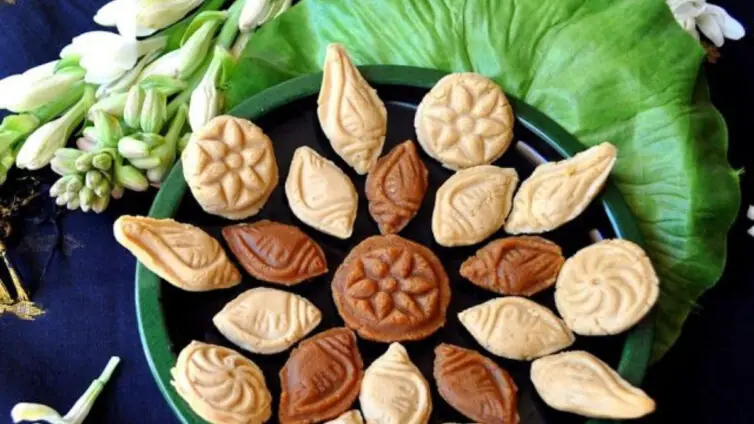
With this, you make nolen gur sandesh that is relished everywhere in West Bengal. If you are someone planning to make Bengali sweets at home during festivities, start by making nolen gur snadesh for your family, friends and guests. As per many Bengal confectioners and sweet makers, nolen gur is the best accessory of a dessert. This is perhaps why the nolen gur versions of typical desserts like sandesh and roshogolla are often priced more in comparison to sweets made with ‘cheeni’ or sugar.Sandesh comes in a variety of forms and flavours, but nolen gur sandesh, also known as cottage cheese fudge made with date palm jaggery, is arguably the most popular. It is now available in other seasons as well. Nolen Gur sandesh has a distinct, earthy scent and melts in your mouth, flavoured with the wonderful nolen gur! While making it at home, there are a few tips and tricks you need to keep in mind to make each nolen gur sandesh perfect!