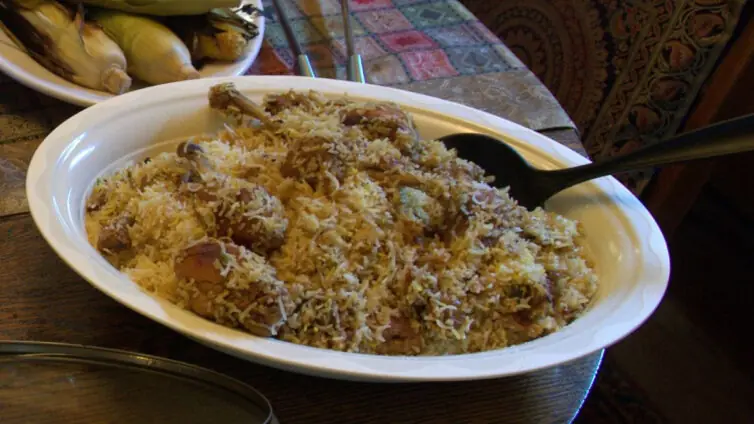
The repertoire of dishes of the Muslim community see a Mughal influence. Within Kerala, Thalassery also pioneered the bakery industry, with the first bakery established in 1880 and Western cakes being introduced in 1883. Thalassery cuisine is a part of Malabar cuisine, which hails from the North of Kerala, unlike its Southern counterpart, which is referred to as Syrian-Christian cuisine.
Most of the food that’s part of Malabar cuisine uses ghee. Biryani originated during the reign of the Mughals, who brought the biryani from Samarkand, but this version is indigenous to the Malabar Coast. It symbolises the merging of Mughal and Malabari culture and cuisine. It is believed that Thalassery biryani came into being due to the influence of Mysore and Arkot’s Muslim rulers and is a reminder of foreign influences in the Malabar region. It is a part of traditional Mappila cuisine.
The history of Thalassery Biryani reflects the influence the Arabian traders had over the Malabar coast. Hi
The repertoire of dishes of the Muslim community see a Mughal influence. Within Kerala, Thalassery also pioneered the bakery industry, with the first bakery established in 1880 and Western cakes being introduced in 1883. Thalassery cuisine is a part of Malabar cuisine, which hails from the North of Kerala, unlike its Southern counterpart, which is referred to as Syrian-Christian cuisine.
Most of the food that’s part of Malabar cuisine uses ghee. Biryani originated during the reign of the Mughals, who brought the biryani from Samarkand, but this version is indigenous to the Malabar Coast. It symbolises the merging of Mughal and Malabari culture and cuisine. It is believed that Thalassery biryani came into being due to the influence of Mysore and Arkot’s Muslim rulers and is a reminder of foreign influences in the Malabar region. It is a part of traditional Mappila cuisine.
The history of Thalassery Biryani reflects the influence the Arabian traders had over the Malabar coast. Historically, the local Muslim community in this particular region used to add their own distinct touch to the biryani recipe, which in turn, created a unique recipe that is now considered to be a culinary gem with its distinct layers, cooking techniques and aromas. Cooked using the dum pukht technique, which involves slow cooking in a sealed pot or handi, here the pot is sealed with dough to trap the steam, allowing the meat and rice to cook in their own juices.
The slow cooking process ensures that the flavours of the spices and herbs infuse into every grain of rice and every tender morsel of meat, creating a rich mix of varied flavours. Raita, a yoghurt-based side dish, is a popular accompaniment that helps balance the spiciness of this biryani. The biryani is often garnished with fried onions, fresh mint leaves, and lemon wedges, adding a vibrant touch to the presentation.
It is not just a dish but a symbol of hospitality and togetherness. The preparation of Thalassery Biriyani is often a communal affair, with family members and friends coming together to help with the intricate steps of layering and cooking.