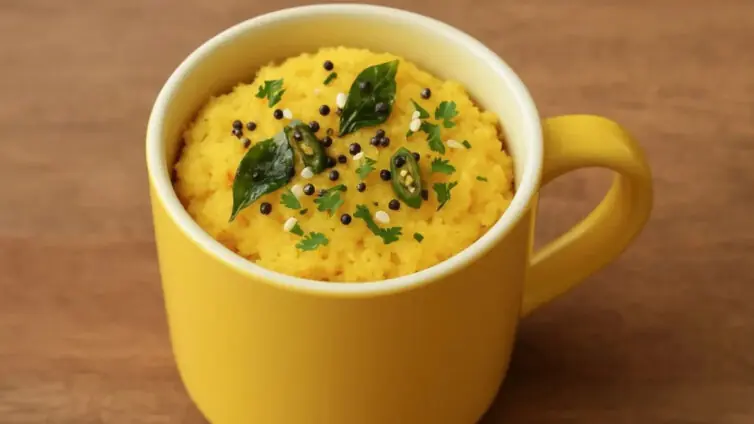
When someone begins cooking, the kitchen can feel confusing at first. There are too many utensils, too many steps, and too many instructions online. That is why small recipes help. A mug dhokla feels manageable because it is made in one cup and cooked in a microwave. There is no large vessel and no long waiting time.
Traditional dhokla comes from Gujarati kitchens and is usually steamed in a wide plate or tin. It takes time to ferment or at least rest before steaming. In many homes, dhokla is made for breakfast, tea time, or when guests arrive. The microwave version is not traditional, but it gives beginners a way to understand the basics without feeling overwhelmed.
This recipe uses gram flour, which is also called besan. Besan is common in Indian cooking and is used in many snacks and savoury dishes. It mixes easily with yoghurt and water to form a batter. When fruit salt is added, the batter rises during cooking. Watching this happen in a mug can feel surprising and satisfying for s
When someone begins cooking, the kitchen can feel confusing at first. There are too many utensils, too many steps, and too many instructions online. That is why small recipes help. A mug dhokla feels manageable because it is made in one cup and cooked in a microwave. There is no large vessel and no long waiting time.
Traditional dhokla comes from Gujarati kitchens and is usually steamed in a wide plate or tin. It takes time to ferment or at least rest before steaming. In many homes, dhokla is made for breakfast, tea time, or when guests arrive. The microwave version is not traditional, but it gives beginners a way to understand the basics without feeling overwhelmed.
This recipe uses gram flour, which is also called besan. Besan is common in Indian cooking and is used in many snacks and savoury dishes. It mixes easily with yoghurt and water to form a batter. When fruit salt is added, the batter rises during cooking. Watching this happen in a mug can feel surprising and satisfying for someone still learning.
For a beginner cook, this recipe builds small confidence. The steps are short but still teach basic ideas like mixing smoothly, checking consistency, and adjusting salt. Even if the first attempt is slightly dense or uneven, the loss is small because the portion is small. That makes it easier to try again.
This mug dhokla works well for evenings when hunger comes suddenly. It also suits those who live alone and do not want to cook a full meal. The soft texture and mild taste feel comforting. It is simple food, but making it yourself feels different from ordering something.