Diwali Delights: Must-Try Sweets From All Regions
Diwali Delights: Must-Try Sweets From All Regions
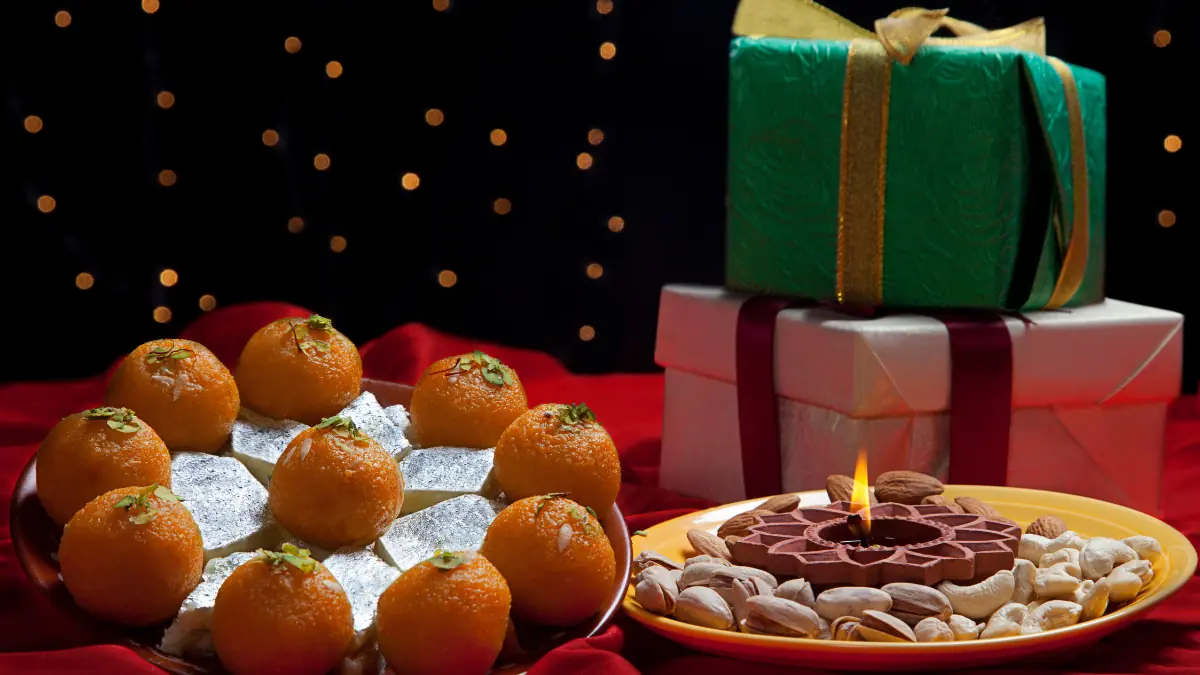


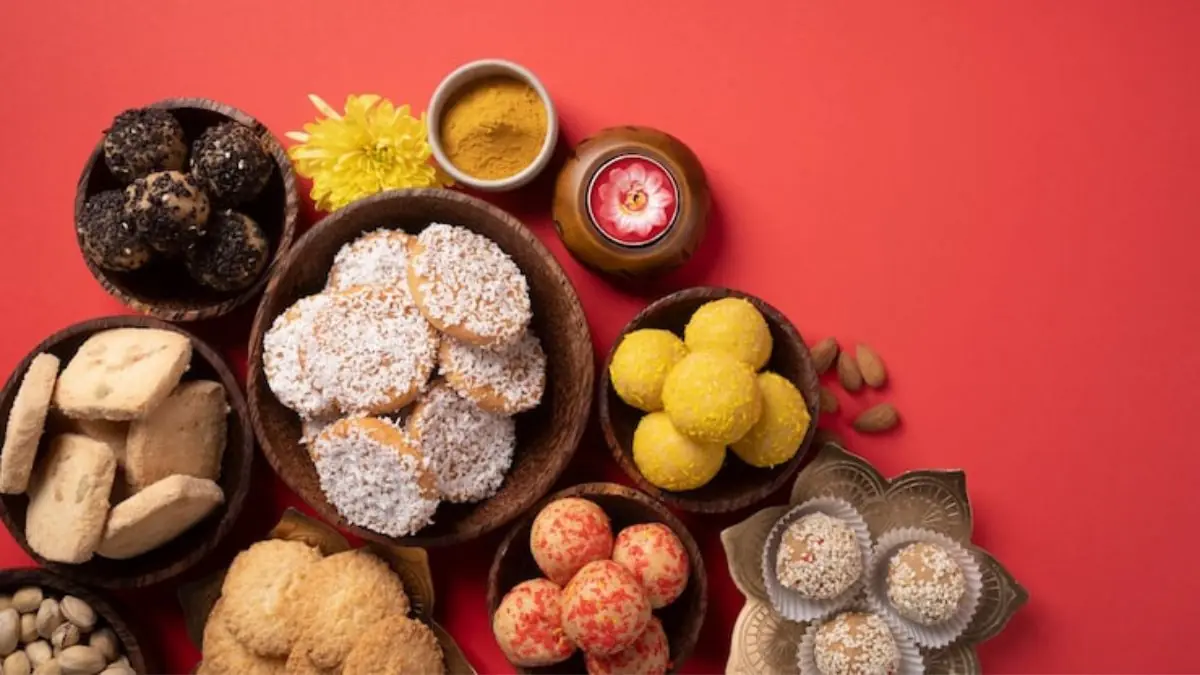
If you have been having the same sweets for Diwali every year, this is your sign to get out of your comfort zone. While you might still enjoy your favourites, here is a list of some of the most indulgent regional mithais that are made for Diwali in different parts of India.
Diwali is truly an emotion. If you close your eyes and think about the festival, your mind will immediately go to the twinkling lights in every corner of the city, kids bursting crackers, homes lit up with diyas, and an aroma of freshly prepared mithai that surrounds the neighbourhood.
Do you remember as a child when you had to wait for hours to get a piece of your favourite sweet until the puja was over and the prasad was distributed? It’s overwhelming how Diwali can create the same emotions every year and still let you revisit childhood memories. It’s true that familiar food can take you down memory lane, and India, with its rich diversity, has billions of little traditions uniquely spread across different cultures, regions, and households.
While for Diwali is about a bowl of piping hot gulab jamuns, for some it’s about a box of kaju katli, or a thali filled with sandesh and rasgullas. But if there’s one thing that unites the country, it’s the love for sweets and the mutual admiration for the festival. If you want to get a taste of the diverse range of sweets from all across the country, here are some traditional Indian mithais that are made, served, and gifted in different regions.
Gulab Jamun (North India)
No Diwali is complete in the Northern parts of India without gulab jamun. Made with khoya, deep-fried, and then soaked in sugar syrup, this sweet is unforgettable. The mini versions of gulab jamun that can be served hot and cold are super addictive and are often a part of both Diwali platters and bhog thalis. For the regular, juicy gulab jamuns, you can warm them up a little before serving.
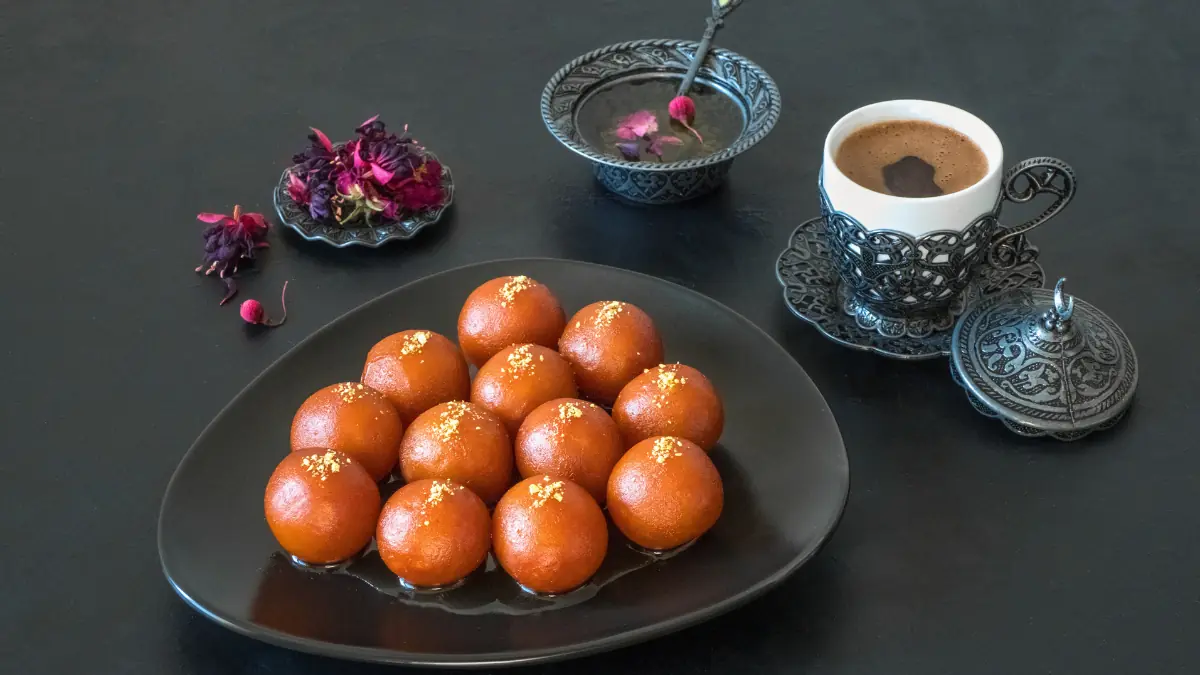
Pro tip: Warm some gulab jamuns and serve them with a scoop of vanilla ice cream for the best dessert combo ever.
Rasgulla (West Bengal & Odisha)
Rasgulla or rosogola is the staple sweet from West Bengal and Odisha. While both states have their versions of the sweet, one thing that remains the same is that rasgulla is a mouth-melting ball made with chhena. As for festivities like Diwali puja, Bhai Dooj, and even mithai boxes to gift to your loved ones, rasgulla can be a great addition. You can now get rasgullas in a range of different colours at sweet shops and make your Diwali thali completely Instagrammable.
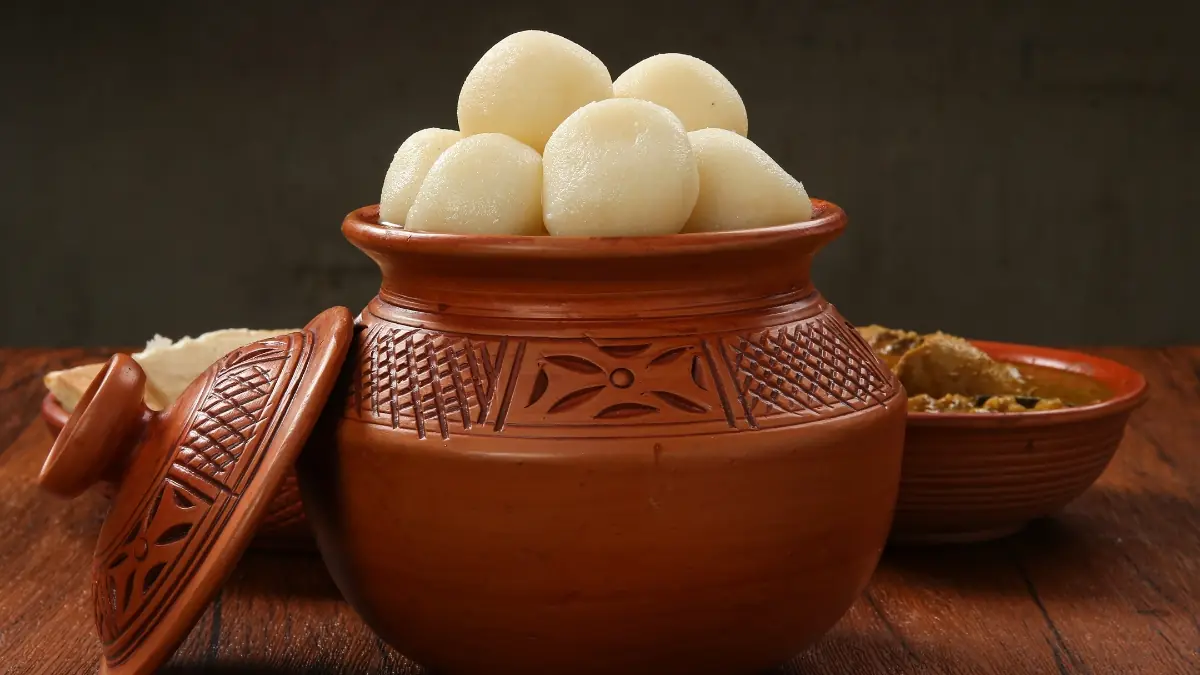
Fun fact: Unlike the Bengali version, Odisha Rasagola is not chewy, but denser with a slightly brownish colour.
Mysore Pak (Karnataka)
From Karnataka, Mysore pak is a Diwali essential. Made with minimal kitchen ingredients like besan, ghee, and sugar, Mysore pak is known for being simple yet indulgent. While the traditional Mysore pak, as made in the streets of Karnataka, has a firm and crumbly texture, the modern versions that are sold across the country have more ghee and just melt in your mouth. Garnished with a generous amount of chopped dry fruits and nuts, you must try this regional mithai this festive season.
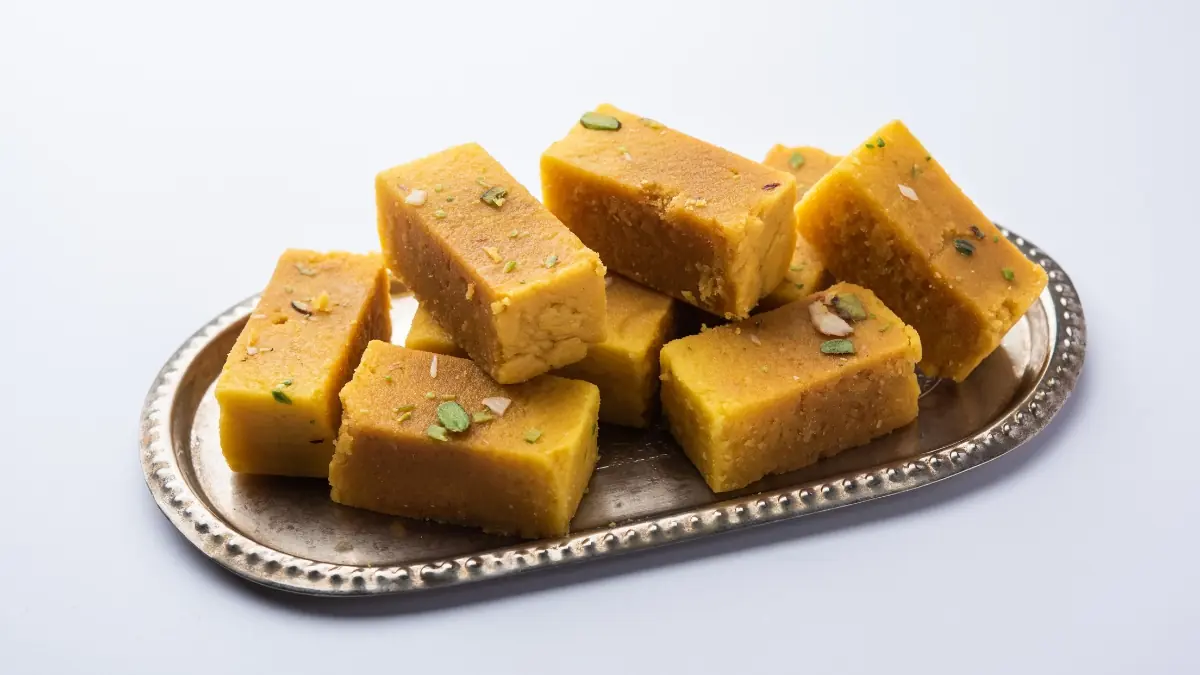
Pro tip: Whether you’re getting Mysore pak for puja bhog or as a gift, ensure the mithai is freshly prepared. You can check the freshness by the aroma of the ghee.
Kaju Katli (Pan-India)
Kaju katli is synonymous with Diwali. The diamond-shaped sweet coated with a silver foil has to be the best part of the festive season. Since they’re made with cashew nuts and not a lot of sugar, kaju katli is also a great option for people who prefer their mithai to be less sweet. And a great thing about kaju katli is that you can make the sweet perfectly at home without spending too much time in the kitchen.
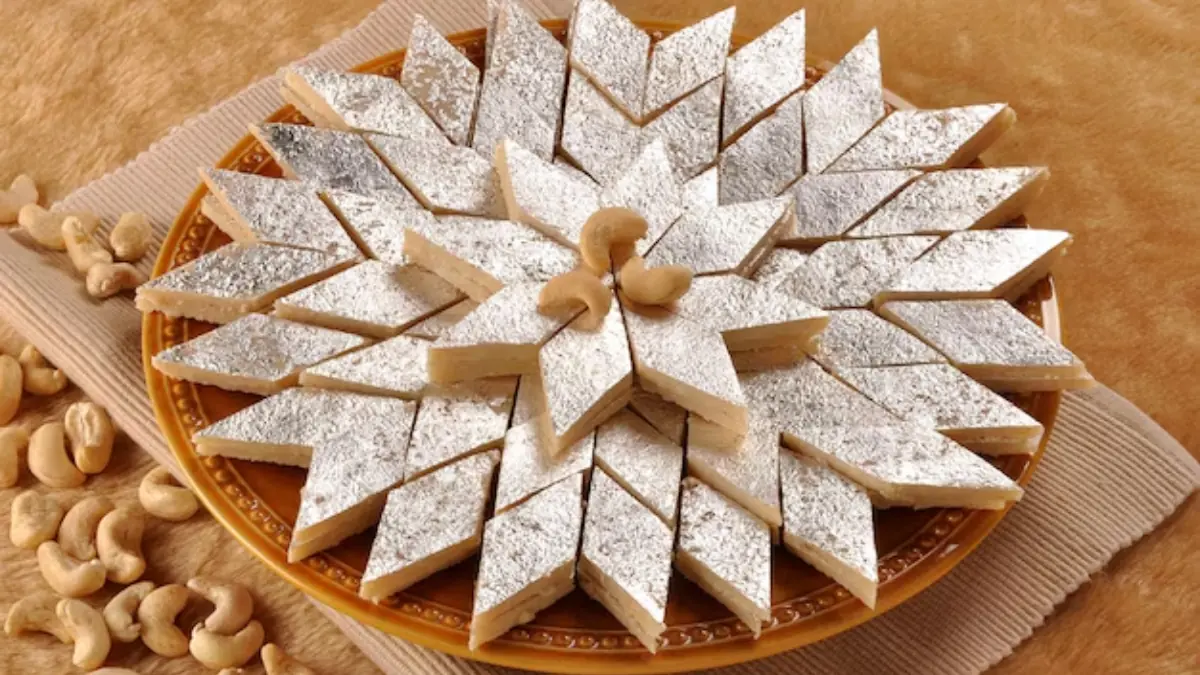
Did you know: Kaju katli has now been adapted by sweet shops into many variations. From kaju kalash to kaju katli rolls, you can enjoy the same taste in different forms.
Coconut Ladoo (South India)
Incorporating the naturally sweet ingredients, coconut, nariyal ke ladoo is another popularly made sweet for Diwali. They too require basic kitchen ingredients like shredded coconut, condensed milk, sugar, or jaggery. The best part about coconut ladoos is that instead of buying them from a mithai shop amid Diwali rush, you can make them at home in less than an hour. All you need to do is saute coconut shreds, mix them with condensed milk and add some sugar or jaggery. Once you get a consistent mixture, shape them into ladoos, and you’re all done.
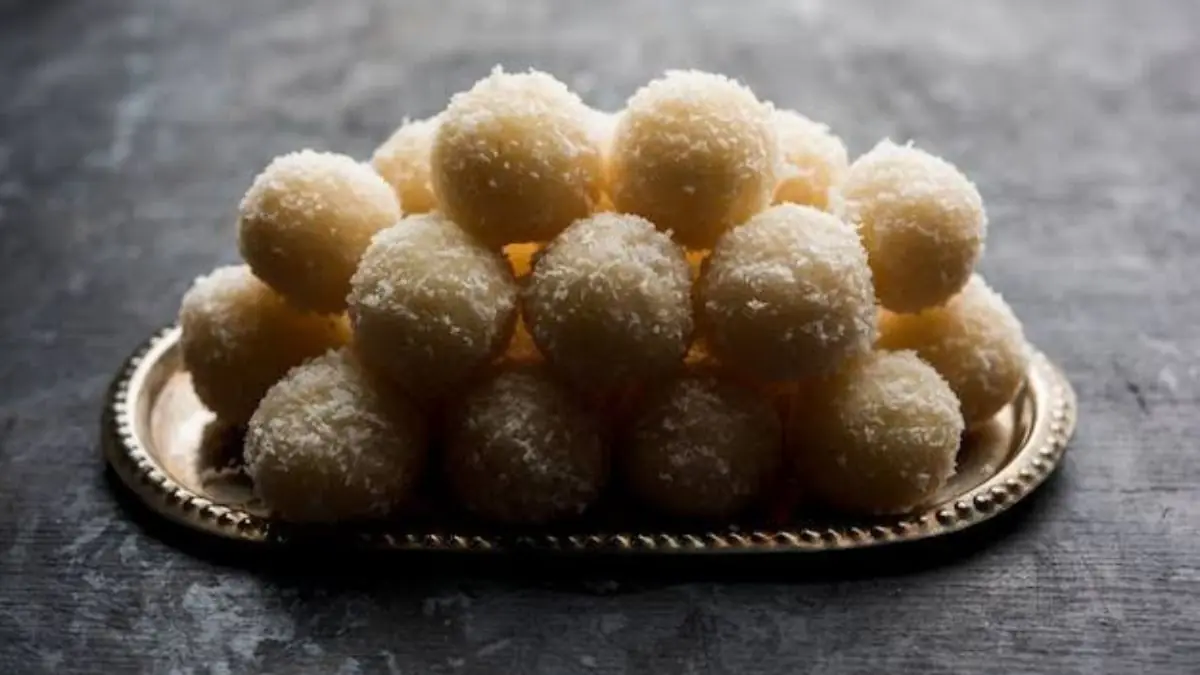
Cooking tip: Toast the shredded coconut till you get a nutty aroma and immediately add the rest of the ingredients. If cooked for a longer time, the coconut can leave a bitter aftertaste.
Sandesh (West Bengal)
When it comes to less-sugary sweets, sandesh is another traditional option. Popularly made in the Eastern parts of the country, sandesh is whipped up using fresh chhena, a little saffron, and flavoured with cardamom. It’s a light mithai that feels luxurious but doesn’t hamper your digestive system. With its innovative variations, such as chocolate sandesh, kesar sandesh, aam sandesh, and even sandesh cake, you cannot miss the opportunity to savour the authentic Bengali mithai.
Did you know: The secret behind the perfect sandesh lies in the milk. To give sandesh its distinctive smoothness, it’s best to use the freshest milk.