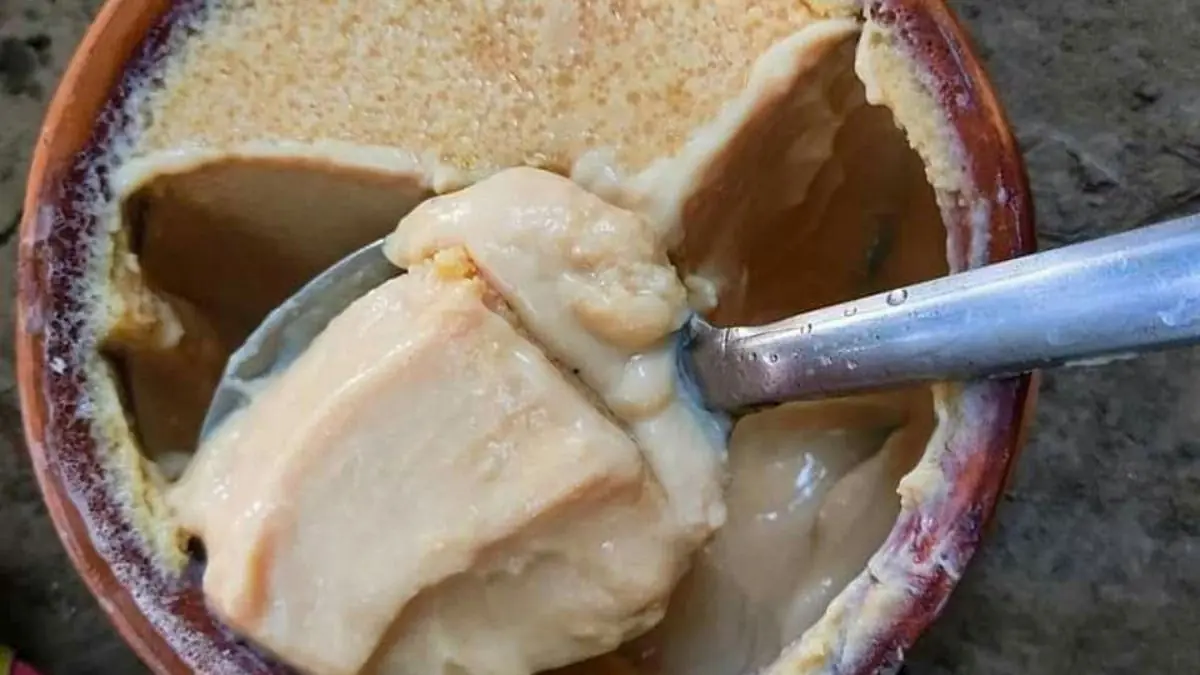
The story of the Bengali dessert actually goes way back and begins with the fermented curd itself. Curd first became popular in Bulgaria. The local tribes of the region offered it to their overlords in bags that were made from animal skins. The bags, in essence, helped in the fermentation process. The Bulgarians have a rich history with yoghurt, and their love for this has travelled throughout the entire border.
With the coming of the British came a version of the yoghurt, not to say that there is no possibility that Indians had their own curd dish in India. The real mishti doi was developed somewhere in the Bogra district of then Bengal, and it spread like wildfire throughout the state and to other parts like Assam and Odisha. The usage of earthen pots to make the dessert is credited to the region as well. The pots let the doi thicken and set while allowing the ferment to culture.
Another claim about the origins of mishti doi comes from Sherpur district, where a Bose family pioneered
The story of the Bengali dessert actually goes way back and begins with the fermented curd itself. Curd first became popular in Bulgaria. The local tribes of the region offered it to their overlords in bags that were made from animal skins. The bags, in essence, helped in the fermentation process. The Bulgarians have a rich history with yoghurt, and their love for this has travelled throughout the entire border.
With the coming of the British came a version of the yoghurt, not to say that there is no possibility that Indians had their own curd dish in India. The real mishti doi was developed somewhere in the Bogra district of then Bengal, and it spread like wildfire throughout the state and to other parts like Assam and Odisha. The usage of earthen pots to make the dessert is credited to the region as well. The pots let the doi thicken and set while allowing the ferment to culture.
Another claim about the origins of mishti doi comes from Sherpur district, where a Bose family pioneered it. The Nawab Bogra was infatuated by the dessert and helped the family set up shop to sell it to the public. Mishti doi is now a staple dessert in the Bengali culture and available in every sweet shop, but if you want a taste of this in Delhi, your best bet is CR Park. Yoghurt companies have also tried to create their own versions, but nothing is as good as the real thing.
Traditionally, mishti doi is made by slowly reducing sweetened milk until it thickens and develops a beautiful caramel colour. The milk is then mixed with a culture of curd or yoghurt, which ferments and adds a tangy note to the overall sweetness. This process allows the flavours to intensify, resulting in a dessert that is bursting with richness.
While mishti doi is traditionally served in earthen pots known as “kuler chhota” in Bengali, you can use any small, individual serving bowls or ramekins. The earthiness of the earthen pots is said to enhance the flavours of the dessert, but it’s not essential. Making mishti doi at home is a super-easy process. A few tips and tricks and correct measurements do the work.