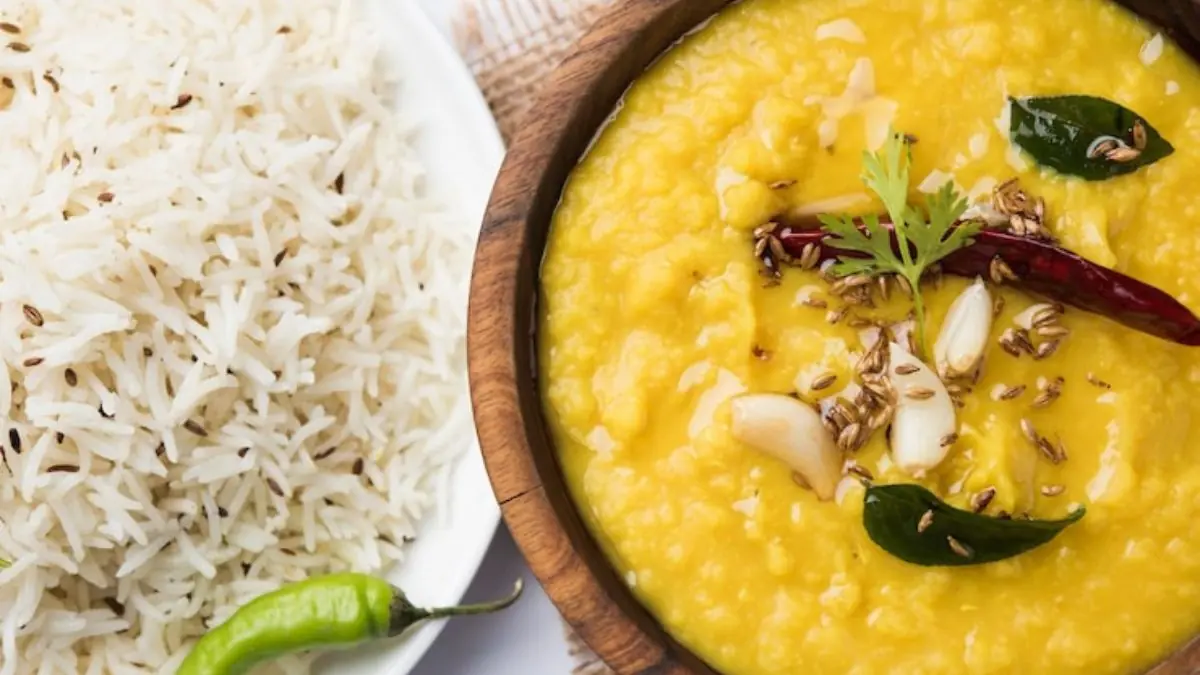
Dal fry and rice is a meal that people return to again and again, especially when learning to cook. It is not complicated and does not need special ingredients. Most kitchens already have what is needed to make it. This is why it becomes an easy choice on busy days or slow days. The meal feels complete without needing side dishes.
The dal used in this recipe is usually toor dal. The dal is washed well and cooked with water and turmeric. While cooking, the dal becomes soft and breaks easily. This step is important because the texture of the dal decides how good the final dish will feel. If the dal is not cooked enough, it will taste rough. If it is cooked properly, it becomes smooth and easy to eat.
Once the dal is cooked, it is kept aside. The flavour comes mainly from the tadka. Oil or ghee is heated in a pan. Cumin seeds are added first. When they crackle, garlic is added. Garlic should cook slowly so it does not burn. Onion is added next and cooked till soft. Tomato is added and coo
Dal fry and rice is a meal that people return to again and again, especially when learning to cook. It is not complicated and does not need special ingredients. Most kitchens already have what is needed to make it. This is why it becomes an easy choice on busy days or slow days. The meal feels complete without needing side dishes.
The dal used in this recipe is usually toor dal. The dal is washed well and cooked with water and turmeric. While cooking, the dal becomes soft and breaks easily. This step is important because the texture of the dal decides how good the final dish will feel. If the dal is not cooked enough, it will taste rough. If it is cooked properly, it becomes smooth and easy to eat.
Once the dal is cooked, it is kept aside. The flavour comes mainly from the tadka. Oil or ghee is heated in a pan. Cumin seeds are added first. When they crackle, garlic is added. Garlic should cook slowly so it does not burn. Onion is added next and cooked till soft. Tomato is added and cooked till it turns mushy. These steps are simple but important. They build the taste of the dal and are easy to follow.
Spices are added after the onion and tomato cook properly. Turmeric, red chilli powder, and garam masala are used in small amounts. These spices do not make the dal heavy. They only add warmth and colour. Once the spices mix well, the cooked dal is added to the pan. Everything is mixed slowly. Water can be added if the dal feels too thick. The dal is then allowed to simmer for a few minutes.
Rice is cooked separately. Plain rice works best for this meal. The rice is washed well before cooking so excess starch is removed. This helps keep the grains separate. Rice is cooked with water and a little salt. Once cooked, it is fluffed gently. Overcooked rice can turn sticky, so it is better to keep an eye while cooking.
When served together, dal and rice balance each other. The dal adds flavour and warmth. The rice keeps the meal light. Many people eat this meal without anything extra. Some may add a little pickle or papad, but the meal feels complete even without them.
This dal fry and rice combo also works well for lunchboxes. The flavours stay good even after cooling. The dal does not dry quickly, and rice stays soft. This makes it useful for office lunches and travel meals. It is also easy to reheat.
This meal suits all age groups. It is easy to chew and digest. It does not feel oily or spicy when cooked properly. Because of this, it is often cooked for families and guests. It is a reliable meal that fits into daily life and helps build confidence in the kitchen.