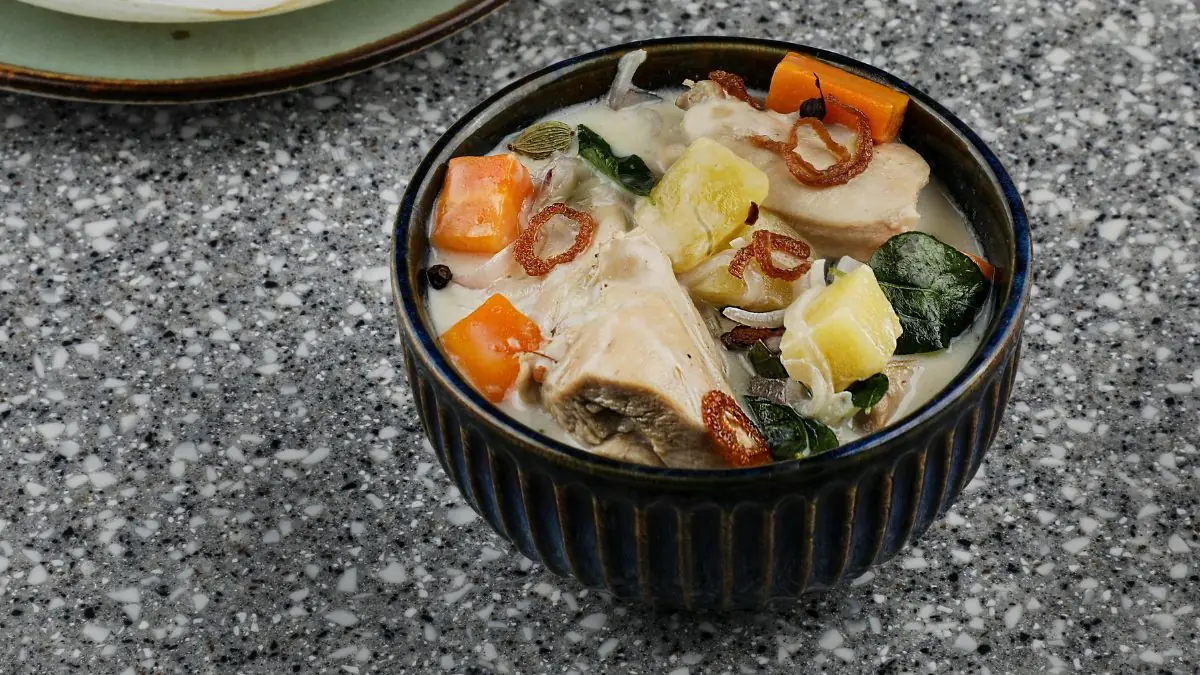
Think soft, luscious appam, slightly airy and tangy, dipped in a bowl of silky, creamy chicken stew that the pancake absorbs like a sponge: taking a bite of this delicious pairing feels like a warm embrace on a chilly evening. Chicken stew and appam is a staple pairing in the coastal kitchens of Kerala, known for its subtle but nuanced tasting notes.
What makes the chicken stew so special is the fresh coconut milk which lends it a silky and velvety texture and the slow-cooking technique that introduces a lot of tenderness into the recipe. Adding vegetables like carrots and potatoes further builds into the subtle richness of the dish, all of which is complemented by the addition of spices like curry leaves, cinnamon, cloves, ginger and garlic among others.
Making the stew itself can be a slightly meticulous affair. It involves extracting maximum flavour out of all the different ingredients added to the recipe in a harmonious balance, without any one tasting note overpowering the other.
Think soft, luscious appam, slightly airy and tangy, dipped in a bowl of silky, creamy chicken stew that the pancake absorbs like a sponge: taking a bite of this delicious pairing feels like a warm embrace on a chilly evening. Chicken stew and appam is a staple pairing in the coastal kitchens of Kerala, known for its subtle but nuanced tasting notes.
What makes the chicken stew so special is the fresh coconut milk which lends it a silky and velvety texture and the slow-cooking technique that introduces a lot of tenderness into the recipe. Adding vegetables like carrots and potatoes further builds into the subtle richness of the dish, all of which is complemented by the addition of spices like curry leaves, cinnamon, cloves, ginger and garlic among others.
Making the stew itself can be a slightly meticulous affair. It involves extracting maximum flavour out of all the different ingredients added to the recipe in a harmonious balance, without any one tasting note overpowering the other. Yet, when made right, chicken stew and appam can become your next preferred comfort food – its soft spicy notes and aromatic touches slowing your busy day down to that one relaxing, peaceful moment.
Read More
Tips and Tricks
1 To prepare the chicken stew, use a heavy-bottomed TTK Prestige Cast Iron Scratch Resistant Round Base Kadai which will lend the chicken and the vegetables and even cook, without overbrowning the ingredients.
2 Adding fresh coconut milk to the stew can go a long way in preparing a bright and aromatic Kerala-style curry. Use the TTK Prestige Mixer Grinder to extract both thin and thick fresh coconut milk that can be added to the curry.
3 Grinding the fermented rice well is a crucial step in getting the appams right. The batter has to be finely ground, yet coarse enough to maintain its aeration. A TTK Prestige Mixer Grinder can come in handy for making this well-fermented appam batter.
4 Semi-cooking the chicken before adding it to the stew can make it tender and softer. Prep the chicken in the TTK Prestige Nakshatra Svachh Hard Anodised Pressure Cooker. Just allow the cooker to whistle twice before taking it off the heat.
5 Serving the stew with fluffy appams is an essential part of this comforting meal. Use the TTK Prestige Dosa Tawa to lather the appams and serve them hot with the stew.