Kashmir stood as a beloved spot for the Mughal Rulers. For those who’ve experienced or plan to visit this stunning place, the architecture and food resonate with Mughal influences. Often dubbed the ‘Switzerland of India,’ Kashmir offered the Mughals an escape from the routine politics of Delhi. Their presence sparked a unique culinary style in the region, drawing inspiration from Iranian and Iraqi flavours and harmonising with the local spices found in Kashmir.
Rogan Josh has its roots in Persia. “Rogan” in Persian means clarified butter, while “Josh” stands for cooking meat at high heat. When this dish travelled to Kashmir through the Mughals, it adapted to the region’s spices and cooking style. This stew is made from mutton or lamb, and surprisingly, it became a hit with the Kashmiri Brahmins, a unique group who don’t usually eat meat as part of their culture. Although Kashmiri Brahmins are known for consuming meat, they have an aversio
Kashmir stood as a beloved spot for the Mughal Rulers. For those who’ve experienced or plan to visit this stunning place, the architecture and food resonate with Mughal influences. Often dubbed the ‘Switzerland of India,’ Kashmir offered the Mughals an escape from the routine politics of Delhi. Their presence sparked a unique culinary style in the region, drawing inspiration from Iranian and Iraqi flavours and harmonising with the local spices found in Kashmir.
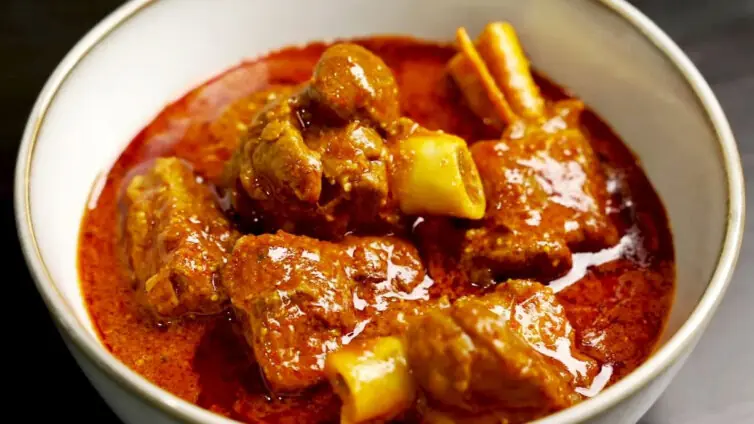
Rogan Josh has its roots in Persia. “Rogan” in Persian means clarified butter, while “Josh” stands for cooking meat at high heat. When this dish travelled to Kashmir through the Mughals, it adapted to the region’s spices and cooking style. This stew is made from mutton or lamb, and surprisingly, it became a hit with the Kashmiri Brahmins, a unique group who don’t usually eat meat as part of their culture. Although Kashmiri Brahmins are known for consuming meat, they have an aversion to the consumption of onions and garlic. This is the reason why authentic Rogan Josh among Kashmiri Brahmins is cooked without using either onions or garlic. Instead, they flavour it with fennel seeds and hing, enhancing the lamb’s taste.
On the other hand, the Mughal version consists of ginger and garlic in huge quantities. “Rogan” means red in Kashmiri, and many historians believe that the name of the dish may refer to the use of Kashmiri Lal Mirch, which gives the dish its colour. Rogan Josh gets its colour from the liberal use of Kashmiri Lal Mirch in the dish.
Rogan Josh is a vital dish in Wazwan, part of the 36-course traditional Kashmiri feast. Alongside dishes like rista, aab gosht, and gushtaba, it’s one of the seven mainstays of this feast introduced in the 14th century in Kashmir. The interesting thing about the Mughal version of rogan josh is its different boiling process and the use of specific kinds of meat. In the Mughal version, lean goat ribs and shallot variants called pran are specifically used. The Muslim variant also uses a lot of chillies and peppers.
When served hot, it is probably the best dish that you can ask for on a harsh winter night in Kashmir. Also, the aroma of the dish is so tempting that one can’t resist having it. There are a lot of ways that you can make this spicy lamb curry. This is the simple and quick one.