For the bonafide cultural foodie, there lies a sheer joy in preparing festive delicacies that are undercut with a traditional, flavourful appeal. In Karnataka, this festive feast is most often referred to as the habbada oota, made exclusively to mark a celebratory occasion. Such a traditional Karnataka food feast comprises multiple dishes, ranging from the hulige or puran poli to sambar-rice to varied vibrant pickles and chutneys.
Habbada oota is a classic fare served on a banana leaf that signifies bounty, prosperity and harmony with nature. This is a very wholesome, homely meal, comprising traditional flavours and classic recipes that are satiating without becoming too stuffy. Whatever the season, elements of the habbada oota can be conditioned to fit the changing climes. One such delicious recipe from the repository of traditional Karnataka food is the batavi payasa.
A sweet treat such as this lesser-known kheer or payasa from northern Karnataka made from wheat flour and suji, is a
For the bonafide cultural foodie, there lies a sheer joy in preparing festive delicacies that are undercut with a traditional, flavourful appeal. In Karnataka, this festive feast is most often referred to as the habbada oota, made exclusively to mark a celebratory occasion. Such a traditional Karnataka food feast comprises multiple dishes, ranging from the hulige or puran poli to sambar-rice to varied vibrant pickles and chutneys.
Habbada oota is a classic fare served on a banana leaf that signifies bounty, prosperity and harmony with nature. This is a very wholesome, homely meal, comprising traditional flavours and classic recipes that are satiating without becoming too stuffy. Whatever the season, elements of the habbada oota can be conditioned to fit the changing climes. One such delicious recipe from the repository of traditional Karnataka food is the batavi payasa.
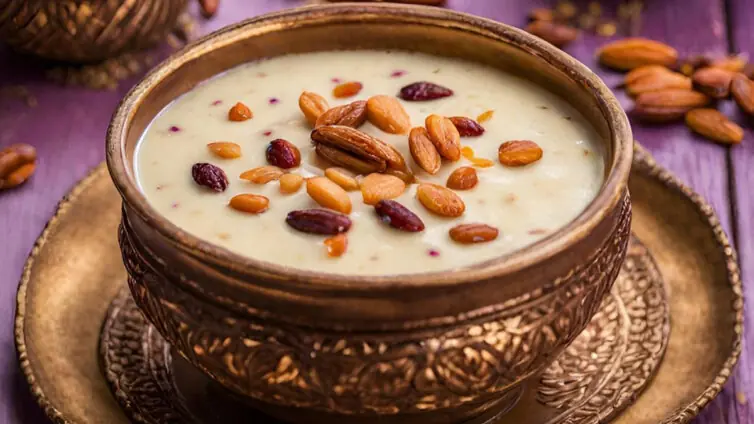
A sweet treat such as this lesser-known kheer or payasa from northern Karnataka made from wheat flour and suji, is a creamy delight on a festive occasion. It is part of the intricate cultural fabric that marks the habbada oota feast. Come any festive occasion, batavi payasa will be an inevitable inclusion in traditional Karnataka food preparations. Simple to prepare yet quite indulgently flavoured, the batavi payasa can be your go-to option the next time the cultural food enthusiast within you wishes to cook a traditional festive meal celebrating Karnataka’s warming cuisine.
Read More
Tips and Tricks
1 Use a non-stick fry pan to prepare the traditional batavi for the payasa. This makes preparing the traditional Karnataka food a fuss-free affair.
2 Heating the milk in a saucepan ensures that it boils uniformly. Always use this handy cookware exclusively for boiling milk to avoid the risk of food residue from splitting it.
3 Prepare the payasa itself in a heavy-bottomed kadai or fry pan to prevent it from sticking to the bottom. As the mixture thickens, it is at greater risk of burning. The kadai will minimise this risk.
4 Make cardamom powder at home in the mixer grinder to craft a fresh, aromatic flavour accent that will garnish the traditional Karnataka food with its inviting aroma.
5 In the same way, crush the cashews in a handy chutney jar of a good mixer grinder before sprinkling them over the traditional habbada oota dessert so the nuts integrate creamily into the payasa.