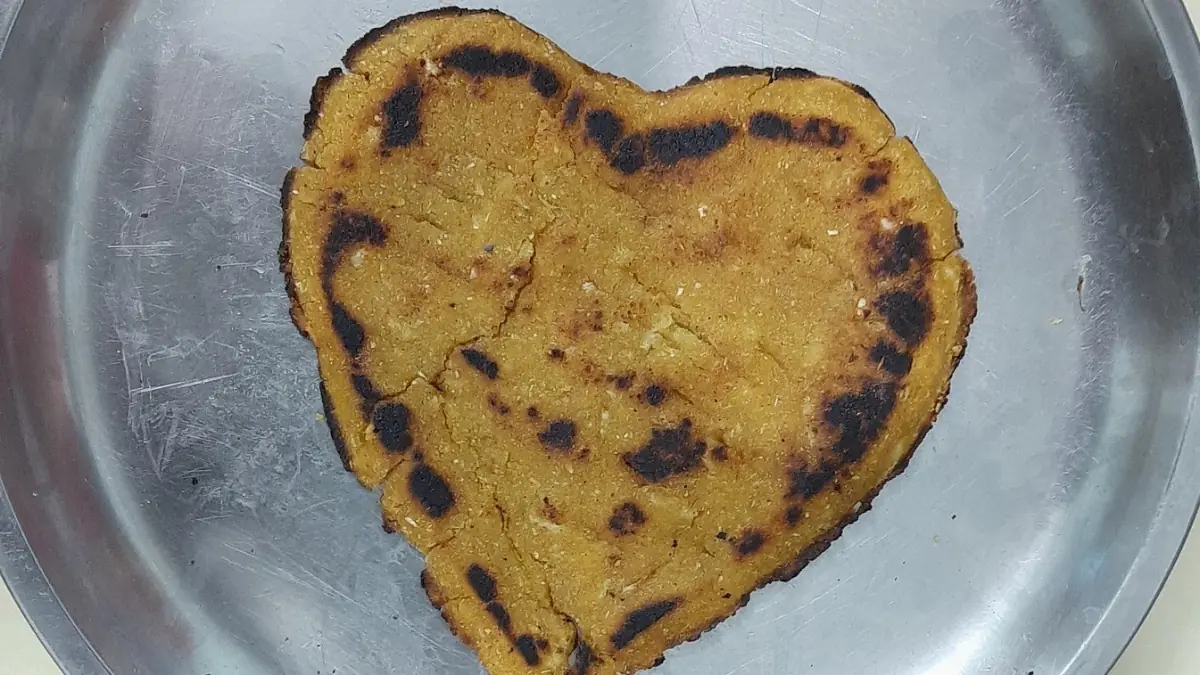
When cooking for someone you love, the intention behind the food matters as much as the taste. A heart-shaped paratha comes from this place. It is made using everyday ingredients and a familiar process, but the small change in shape turns it into something more personal. It feels planned, even though the recipe itself is simple.
Paratha is food that many people grow up eating. It feels safe and comforting on the plate. Shaping it into a heart brings a quiet warmth to the meal. It shows that the cook thought about the person eating it. This makes the meal feel different without changing what the food is.
For a romantic home cook, this recipe works well because it does not add pressure. There is no need to learn a new dish or manage complicated steps. The dough is kneaded the usual way. The cooking happens on the same tawa. Only the shaping needs a little patience, and that patience becomes part of the moment.
This paratha suits meals that are meant to be slow and shared. It works for br
When cooking for someone you love, the intention behind the food matters as much as the taste. A heart-shaped paratha comes from this place. It is made using everyday ingredients and a familiar process, but the small change in shape turns it into something more personal. It feels planned, even though the recipe itself is simple.
Paratha is food that many people grow up eating. It feels safe and comforting on the plate. Shaping it into a heart brings a quiet warmth to the meal. It shows that the cook thought about the person eating it. This makes the meal feel different without changing what the food is.
For a romantic home cook, this recipe works well because it does not add pressure. There is no need to learn a new dish or manage complicated steps. The dough is kneaded the usual way. The cooking happens on the same tawa. Only the shaping needs a little patience, and that patience becomes part of the moment.
This paratha suits meals that are meant to be slow and shared. It works for breakfast on a quiet morning or dinner after a long day. Served with curd, butter, or a simple sabzi, it does not need much else. The shape carries the message.
Making heart-shaped parathas can also be a shared activity. One person can roll while the other cooks. The kitchen stays relaxed. The focus stays on time spent together rather than on perfect results. Even if the shape is not exact, the effort still shows.
In the end, this recipe is less about technique and more about care. It turns a familiar flatbread into something that feels intentional. It suits moments when words feel unnecessary and food becomes the expression instead.