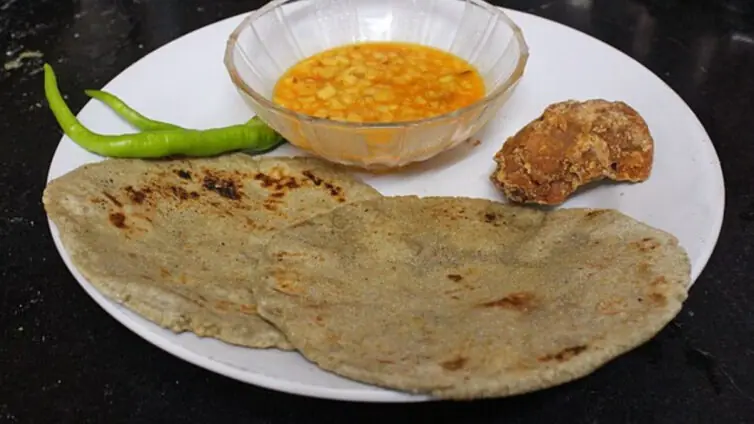
Rajasthan’s cuisine has never failed to impress us with its rich layers. The dishes here perfectly blend with their culture, history and most importantly with their local demands. As we all know, Rajasthan is covered with barren lands and deserts with limited vegetation. The absence of green and leafy vegetables is fulfilled with the usage of lentils, millets and legumes in their cuisine primarily. One of the most beloved traditional dishes of Rajasthan is the Bajra Roti. Bajra, also commonly known as pearl millet, is a gluten-free grain that grows well, even in a dry climate, which is probably why it has become an integral part of Rajasthani food. Bajra Roti not only makes for a dense, delicious treat but is replete with many health benefits too.
The presence of protein in the bajra’s flour can help you build muscle and also nourish cells in the body. One cup of bajra flour contains 7.2 gm of protein, giving vegetarians a good reason to rejoice. Eating bajra roti for breakfast cou
Rajasthan’s cuisine has never failed to impress us with its rich layers. The dishes here perfectly blend with their culture, history and most importantly with their local demands. As we all know, Rajasthan is covered with barren lands and deserts with limited vegetation. The absence of green and leafy vegetables is fulfilled with the usage of lentils, millets and legumes in their cuisine primarily. One of the most beloved traditional dishes of Rajasthan is the Bajra Roti. Bajra, also commonly known as pearl millet, is a gluten-free grain that grows well, even in a dry climate, which is probably why it has become an integral part of Rajasthani food. Bajra Roti not only makes for a dense, delicious treat but is replete with many health benefits too.
The presence of protein in the bajra’s flour can help you build muscle and also nourish cells in the body. One cup of bajra flour contains 7.2 gm of protein, giving vegetarians a good reason to rejoice. Eating bajra roti for breakfast could keep you full all day long without the onset of unnecessary cravings. Bajra’s high fibre content leads to the continuous flow of energy throughout the day. Bajra roti is good for bone health because of the presence of phosphorus in it. This mineral works in parallel to calcium to build the bones in the body. The abundance of ghee while preparing bajra roti just works wonders for the bones and could also ward off early signs of arthritis.
Fried food is an obsession in Rajasthan, as it is in many other parts of India. From the freshly prepared pyaaz kachoris to the vadas and pakoras, there is a range of deep-fried delights that you cannot miss when you’re there. However, there’s also a healthier breakfast alternative for those who wish to keep their calorie count in check and avoid fried food. This includes the famous bajra roti with lehsun chutney.
The locals will not disappoint you from the start of the day, as you will see crunchy and flaky kachoris stuffed with an onion filling being fried in every nook and cranny. Served with chutneys, this is a popular breakfast item and street snack. This reminds us of how chutneys are an important part of Rajasthani cuisine, especially the famous lehsun ki chutney. It is a condiment made by crushing garlic and mixing it with dried red chillies to give it a hot red colour and a spicy kick.
Bajra is a great alternative to wheat flour because it is high in nutrients and filling. This is then paired with lehsun ki chutney and thoroughly enjoyed by the locals. Since bajra roti lacks any significant flavour, the chutney gives it a spicy spin and works well with it. Not just bajra roti, the quintessential Rajasthani lehsun chutney is also paired with dishes like dal baati churma, kalmi vada, and moong dal pakoris. The pungent flavour and distinct aroma of this fiery accompaniment are a treat to the taste buds.