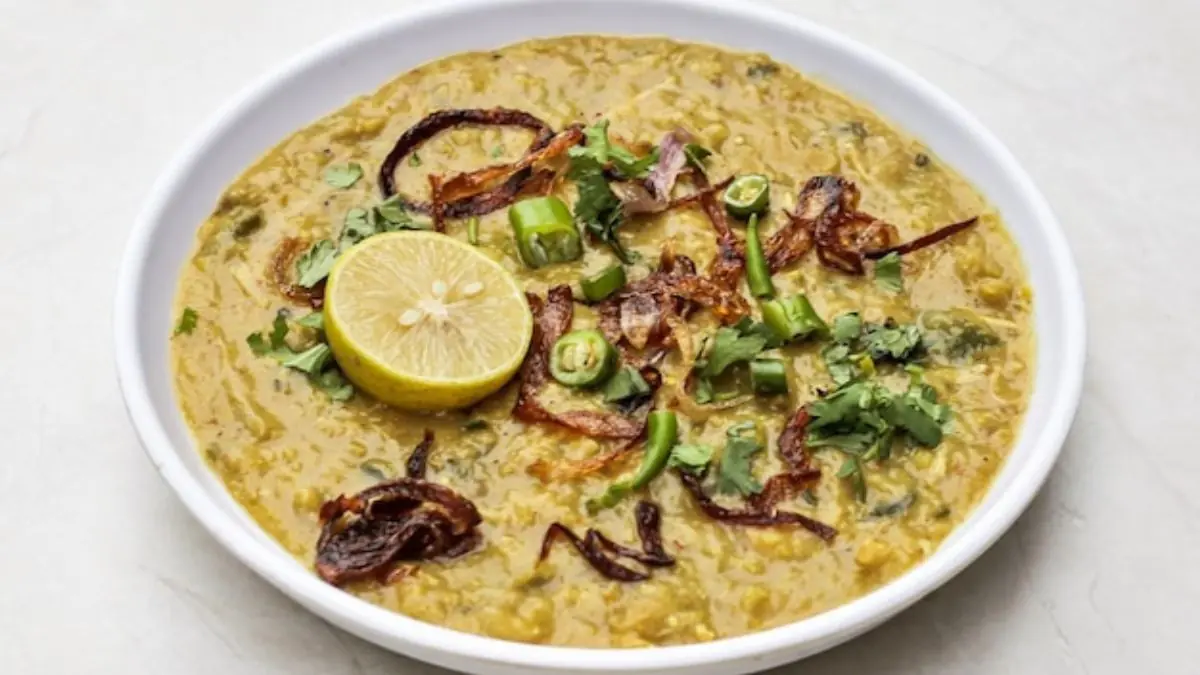
Hyderabadi Haleem is prepared by cooking meat with lentils and broken wheat until the mixture turns completely soft. The dish needs time, so the heat stays low and the pot stays covered for long stretches. When the ingredients cook together slowly, the meat breaks down into fibres and mixes with the lentils, which gives Haleem its smooth texture. The spices go in early so they cook along with everything and release flavour gently.
The meat is usually marinated with ginger-garlic paste, chilli powder and a few whole spices so it becomes tender when cooked. Broken wheat soaks for some time before cooking because it needs moisture to soften well. Lentils like chana dal and masoor dal give body to the mixture, and all of these ingredients come together in one pot for the long simmering stage. Stirring this mixture takes effort because it becomes thick, but this is what gives haleem its unique consistency.
A good haleem is made by mashing or stirring the pot regularly during the slow cookin
Hyderabadi Haleem is prepared by cooking meat with lentils and broken wheat until the mixture turns completely soft. The dish needs time, so the heat stays low and the pot stays covered for long stretches. When the ingredients cook together slowly, the meat breaks down into fibres and mixes with the lentils, which gives Haleem its smooth texture. The spices go in early so they cook along with everything and release flavour gently.
The meat is usually marinated with ginger-garlic paste, chilli powder and a few whole spices so it becomes tender when cooked. Broken wheat soaks for some time before cooking because it needs moisture to soften well. Lentils like chana dal and masoor dal give body to the mixture, and all of these ingredients come together in one pot for the long simmering stage. Stirring this mixture takes effort because it becomes thick, but this is what gives haleem its unique consistency.
A good haleem is made by mashing or stirring the pot regularly during the slow cooking stage. This helps the fibres break down and blend with the lentils. The dish becomes smoother as it cooks longer, and you can adjust the water depending on how thick you want the final texture. A final tempering of fried onions, ghee and whole spices adds aroma and finishes the dish.
Haleem tastes best when it has been cooked for a long time because the flavours settle evenly and the meat softens completely. Many people like to squeeze a little lemon on top or add fresh mint and fried onions for freshness. Once you understand the flow of soaking, simmering, mashing and tempering, the method feels comfortable even though the cooking time is long. It becomes a dish that people look forward to during festivals and weekends.