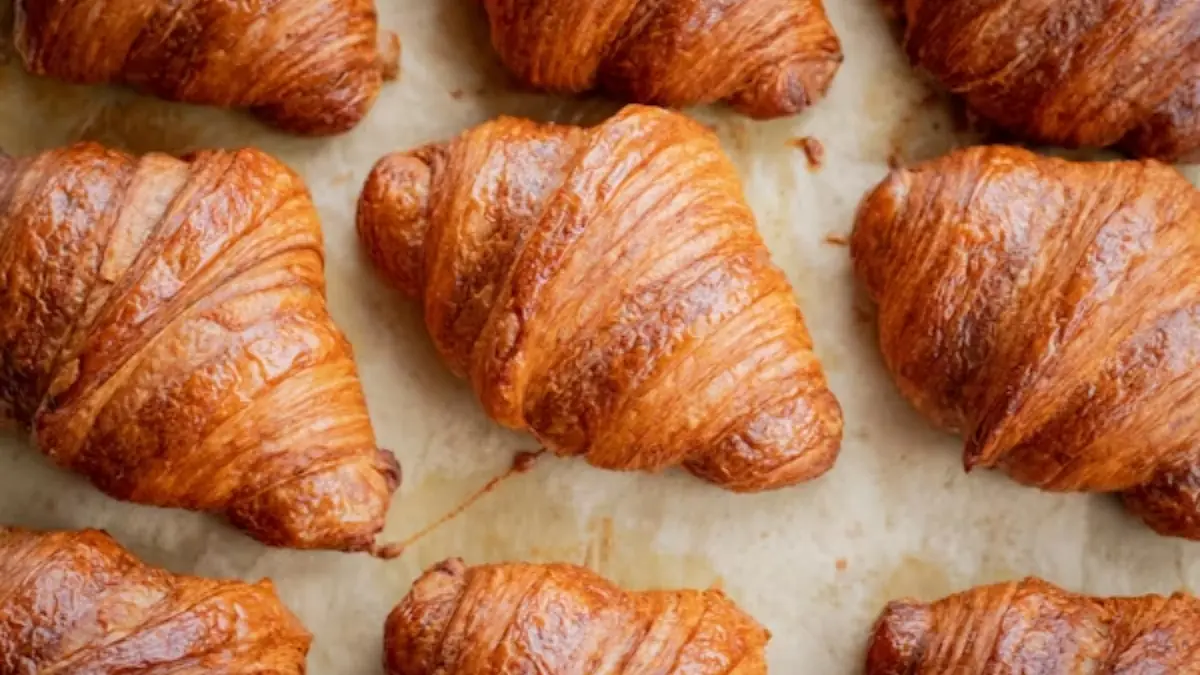
A buttery croissant dipped in hot chocolate has the power to heal everything. While you thoroughly love the croissants from your favourite bakery, you skip the overpriced versions and bake a batch at home. Just imagine having the first bite with a gentle crackle of the paper-thin golden-coloured crust, followed by the buttery soft layers inside. And the magician behind baking the French pastries would be you.
Of course, looking at the flaky layers, it’s only natural to be intimidated before trying the recipe. But note that the secret to a great croissant is just mastering two things: laminating and butter. The lamination process involves making multiple thin layers of dough and butter, which gives the inside of the pastry a flaky and buttery texture. The dough is rolled, folded, and chilled repeatedly to make its characteristic texture. And once the croissants are baked, the water content in the chilled butter used turns to steam, which thereby creates the airy pockets in your
A buttery croissant dipped in hot chocolate has the power to heal everything. While you thoroughly love the croissants from your favourite bakery, you skip the overpriced versions and bake a batch at home. Just imagine having the first bite with a gentle crackle of the paper-thin golden-coloured crust, followed by the buttery soft layers inside. And the magician behind baking the French pastries would be you.
Of course, looking at the flaky layers, it’s only natural to be intimidated before trying the recipe. But note that the secret to a great croissant is just mastering two things: laminating and butter. The lamination process involves making multiple thin layers of dough and butter, which gives the inside of the pastry a flaky and buttery texture. The dough is rolled, folded, and chilled repeatedly to make its characteristic texture. And once the croissants are baked, the water content in the chilled butter used turns to steam, which thereby creates the airy pockets in your batch of croissants.
The other secret is butter. Remember to make croissants; you cannot take the liberty of using any butter other than it will end up getting absorbed in the dough, so give a flat croissant without any layers. So, pick high-quality butter. The next important thing is using cold and pliable butter, which means it should neither be rock solid nor melted. And once you get a grasp of these two essentials, baking croissants will be a cakewalk. You can simply follow this detailed recipe, keep in mind some handy tips, and get some of the most frequently asked questions answered to get a head start on baking the French pastry.