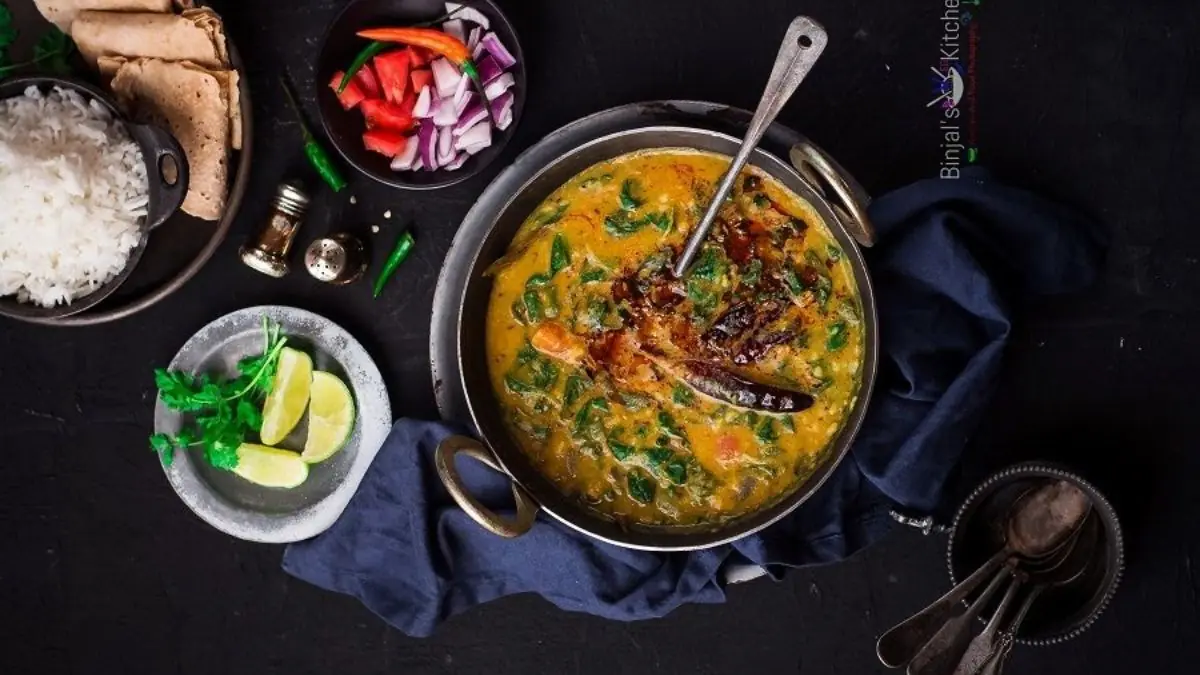
Palak dal tadka is a common dish during the winter season because of its nutritional value and deliciousness. It is a healthy soup which is made with palak and dal. The soup-like consistency of the recipe makes it a fantastic way to start a meal. A nourishing dish made with lentils, spinach, ginger, garlic, and mild spices, paired with rice, makes for a comforting plate of soul food.
Therefore, it is ideal when you are unwell, and also for those who want to kickstart their protein and iron intake. Replete with the goodness of lentils, spinach, ginger-garlic, and flavourful spices, this warm and comforting dish is sure to impress you. Simply serve it seasoned with fresh cream and a generous squeeze of lime.
Traditionally cooked, it is a mix of soaked and pressure-cooked dals and spinach with sauteed spices like cumin, garam masala, turmeric powder, chillies, ginger-garlic, and asafoetida. The spices are sautéed well before being combined with a dal and spinach paste. It is finish
Palak dal tadka is a common dish during the winter season because of its nutritional value and deliciousness. It is a healthy soup which is made with palak and dal. The soup-like consistency of the recipe makes it a fantastic way to start a meal. A nourishing dish made with lentils, spinach, ginger, garlic, and mild spices, paired with rice, makes for a comforting plate of soul food.
Therefore, it is ideal when you are unwell, and also for those who want to kickstart their protein and iron intake. Replete with the goodness of lentils, spinach, ginger-garlic, and flavourful spices, this warm and comforting dish is sure to impress you. Simply serve it seasoned with fresh cream and a generous squeeze of lime.
Traditionally cooked, it is a mix of soaked and pressure-cooked dals and spinach with sauteed spices like cumin, garam masala, turmeric powder, chillies, ginger-garlic, and asafoetida. The spices are sautéed well before being combined with a dal and spinach paste. It is finished off with some cream and seasoned with salt and lemon juice before serving hot.
What comes t0 your mind when you think of an Indian dish which is also damn healthy? Yes, you thought it right, it is palak dal tadka. One of the most loved dals, palak dal tadka, is a food that brings a sense of comfort, and one can have it with rice, roti and bhakri. Plus, it’s quite simple to make.