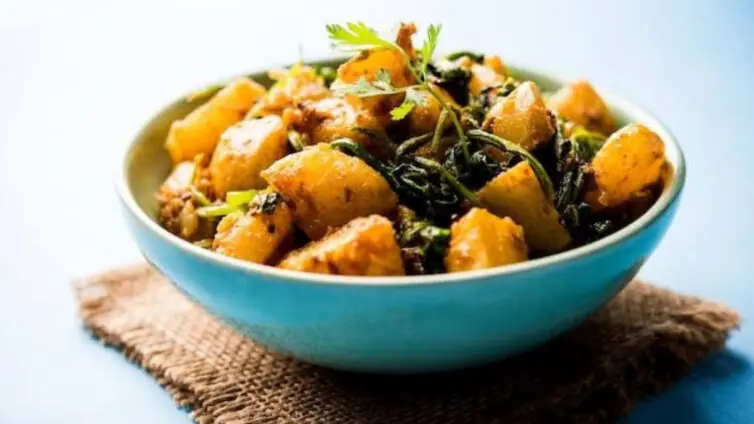
Bateta nu shaak is a dish that belongs firmly to home kitchens. It is not something people usually look for in restaurants. It is cooked regularly in Gujarati households as part of lunch or dinner. For a home cook trying to recreate regional comfort food, this dish feels natural to return to.
The ingredients are basic and do not change much. Potatoes form the base, and the flavour comes from mustard seeds, turmeric, curry leaves, and green chilli. A small pinch of sugar brings balance, which is common in Gujarati cooking. Nothing in the dish feels overpowering, and the spices stay gentle.
What makes this shaak special is the way it is cooked. The potatoes are allowed to soften slowly in water so they absorb the flavour. The gravy stays light and settles as it cooks. There is no rush in this process. Stirring gently and allowing time makes a difference to the final taste.
For many people, this dish brings back memories of everyday meals. It is the kind of sabzi that sits quietly next to
Bateta nu shaak is a dish that belongs firmly to home kitchens. It is not something people usually look for in restaurants. It is cooked regularly in Gujarati households as part of lunch or dinner. For a home cook trying to recreate regional comfort food, this dish feels natural to return to.
The ingredients are basic and do not change much. Potatoes form the base, and the flavour comes from mustard seeds, turmeric, curry leaves, and green chilli. A small pinch of sugar brings balance, which is common in Gujarati cooking. Nothing in the dish feels overpowering, and the spices stay gentle.
What makes this shaak special is the way it is cooked. The potatoes are allowed to soften slowly in water so they absorb the flavour. The gravy stays light and settles as it cooks. There is no rush in this process. Stirring gently and allowing time makes a difference to the final taste.
For many people, this dish brings back memories of everyday meals. It is the kind of sabzi that sits quietly next to dal, kadhi, or rotli. It does not demand attention but completes the meal. The smell while it cooks and the soft texture of the potatoes feel reassuring.
Bateta nu shaak also works well when cooking for different age groups. The spice level stays mild, and the texture is easy to eat. It suits both daily meals and quieter family gatherings. For a home cook, it is a dish that feels satisfying and rooted in tradition.