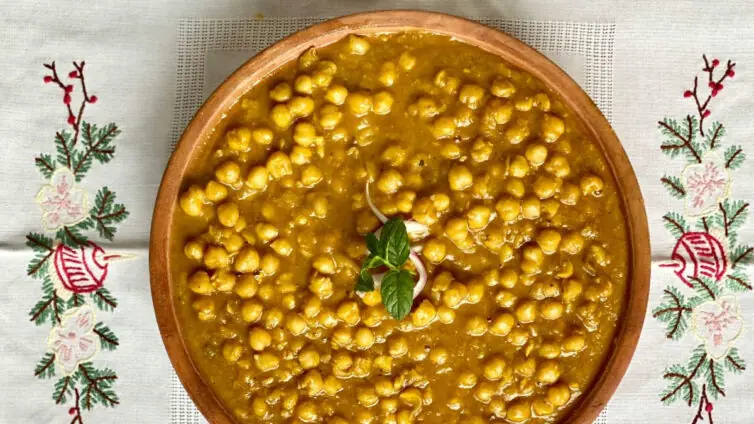
Ghughni is famous in the states of Bengal, Bihar, and UP. These white peas are boiled and cooked with spices, which leave their aroma, making it appetising. The main ingredient of this is called ‘bhaja masala’, which is a Bengali masala made of ground garam masala. Ghugni could be eaten as chaat or could also be paired up with pooris or luchis.
A variety of peas or chickpeas are used in the meal, including black gram, green peas, and white peas. It is an indigenous Indian snack that is particularly well-liked in Bangladesh, the Indian provinces of Assam and Tripura, and the eastern regions of Jharkhand, Odisha, and West Bengal. It is served with hot onion pakoda or bhajiya and puffed rice (kurmura). Dhuska, a fermented rice-lentil dish, is frequently served with ghugni and is also frequently eaten with puris in Calcutta.
A popular street food in Kolkata, Bengal, Odisha, and Bihar. The migrant communities who arrived in the capital of West Bengal during the British era are belie
Ghughni is famous in the states of Bengal, Bihar, and UP. These white peas are boiled and cooked with spices, which leave their aroma, making it appetising. The main ingredient of this is called ‘bhaja masala’, which is a Bengali masala made of ground garam masala. Ghugni could be eaten as chaat or could also be paired up with pooris or luchis.
A variety of peas or chickpeas are used in the meal, including black gram, green peas, and white peas. It is an indigenous Indian snack that is particularly well-liked in Bangladesh, the Indian provinces of Assam and Tripura, and the eastern regions of Jharkhand, Odisha, and West Bengal. It is served with hot onion pakoda or bhajiya and puffed rice (kurmura). Dhuska, a fermented rice-lentil dish, is frequently served with ghugni and is also frequently eaten with puris in Calcutta.
A popular street food in Kolkata, Bengal, Odisha, and Bihar. The migrant communities who arrived in the capital of West Bengal during the British era are believed to have brought this famous dish. This is now more than just a snack; it is a symbol of the city’s diverse culinary culture. Locally referred to as “ghugni-walas,” street vendors have been passing down their secrets of the recipes for generations, and each one has added its special touch to this traditional dish.
In its recipe is “motor dal”, or yellow peas, which are cooked with spices and frequently garnished with tamarind chutney, chopped onions, chillies, and coriander. It is packed with fibre and protein, making it a nutritious choice. Bihari ghugni is made using black chickpeas (also known as kala chana), but Bengali and Odia versions are produced using dried white or yellow peas. People serve this dish with varied toppings and use it as a base to prepare various street food delights.
Some basic spices should be used, such as cumin seeds, turmeric powder, and garam masala; whole spices like bay leaves, cardamom, and cloves give a robust flavour. Additionally, fold in the ginger and fresh green chillies to infuse bland peas with spicy notes. Toppings of green chillies along with chopped onions and coriander bring a crunch and freshness. While potatoes are commonly added to the dish, some vendors also add their unique masala mix to differentiate their recipes from others.To make the lip-smacking street food from Kolkata, add a small amount of tamarind chutney for sourness, chaat masala for a burst of flavour, or crispy fried coconut for robustness. Ghugni is a common street food in Kolkata that is often eaten for breakfast or as a quick snack