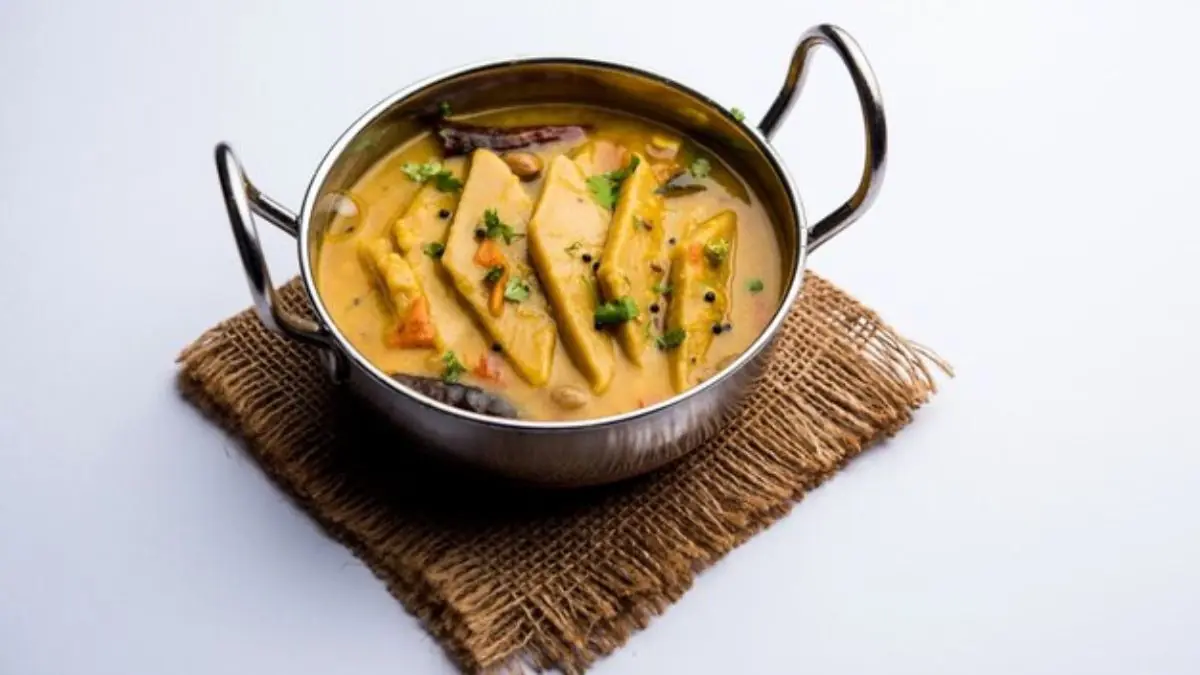
Dal Dhokli is made by cooking toor dal until it turns soft and smooth, and then adding small pieces of rolled dough to the dal so they cook slowly inside it. The dal has turmeric, red chilli, a little jaggery and some tamarind, which gives it a balanced taste that is common in many Gujarati dishes. The dough is made with wheat flour, carom seeds, salt and a small amount of oil, and when rolled thin and cut into pieces, it cooks evenly in the dal.
The dish takes some time because the dhokli pieces must soften properly, and they absorb the dal as they cook. Stirring gently helps them stay separate and not clump together. The final tempering with mustard seeds, cumin, curry leaves and red chilli is added at the end because it brings a stronger aroma and completes the flavour. This step is simple but important.
Dal Dhokli becomes thicker as it cooks, so adding water while simmering helps control the texture. Some people like it thicker, while others prefer it a little lighter. The method i
Dal Dhokli is made by cooking toor dal until it turns soft and smooth, and then adding small pieces of rolled dough to the dal so they cook slowly inside it. The dal has turmeric, red chilli, a little jaggery and some tamarind, which gives it a balanced taste that is common in many Gujarati dishes. The dough is made with wheat flour, carom seeds, salt and a small amount of oil, and when rolled thin and cut into pieces, it cooks evenly in the dal.
The dish takes some time because the dhokli pieces must soften properly, and they absorb the dal as they cook. Stirring gently helps them stay separate and not clump together. The final tempering with mustard seeds, cumin, curry leaves and red chilli is added at the end because it brings a stronger aroma and completes the flavour. This step is simple but important.
Dal Dhokli becomes thicker as it cooks, so adding water while simmering helps control the texture. Some people like it thicker, while others prefer it a little lighter. The method is straightforward, and the steps follow one after another without confusion, which makes it suitable even for someone new to this dish. Once the dal and dhokli blend well, the dish turns into a warm and filling meal.
The recipe is practical because it uses common ingredients and everything cooks in one pot. It works well for lunch or dinner and stays consistent each time you make it. The longer cooking time lets the flavours settle, and it becomes a dish that feels complete without any extra sides.