5 Staple Gujarati Foods To Eat This Dussehra
5 Staple Gujarati Foods To Eat This Dussehra
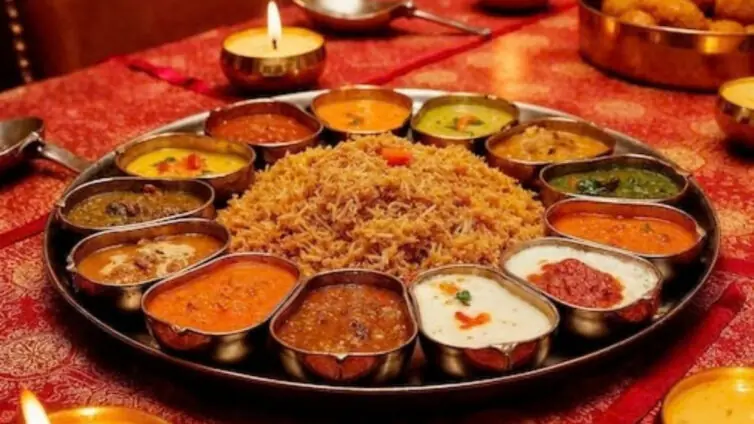


Dussehra in Gujarat comes with its own delicious line-up of sweet, savoury and seriously crispy treats. From the classic fafda-jalebi pairing to airy cholafali, spiced mathiya, rich basundi with puri and fresh lilva kachori, these five festive favourites are a big part of the celebrations. Here’s a look at the dishes that make a Gujarati Dussehra spread so special.
In Gujarat, Vijayadashami (Dussehra) is celebrated not only as the triumph of good over evil, but as a grand morning food festival. Long before sunrise, queues stretch outside local farsan shops as families gather to pick up freshly fried treats. Central to this festive tradition is the belief that starting the day with specific sweet and savoury pairings brings prosperity, energy, and joy. From the crackle of chickpea ribbons to the cool comfort of saffron-scented reduced milk, Gujarati Dussehra staples rely on an extraordinary interplay of textures, gentle warmth, and aromatic seasonings.
Recreating these festive classics at home demands an understanding of dough elasticity, precise oil temperature control, and gradual heat diffusion. While traditional methods rely on manual labour, selectively integrating modern appliances simplifies tedious preparation steps without losing authentic regional flavours. From maintaining stable syrup temperatures to grinding tough heirloom lentils, subtle equipment support ensures your festive spread achieves sweet and savoury perfection.
Fafda Jalebi: The Ultimate Dussehra Breakfast
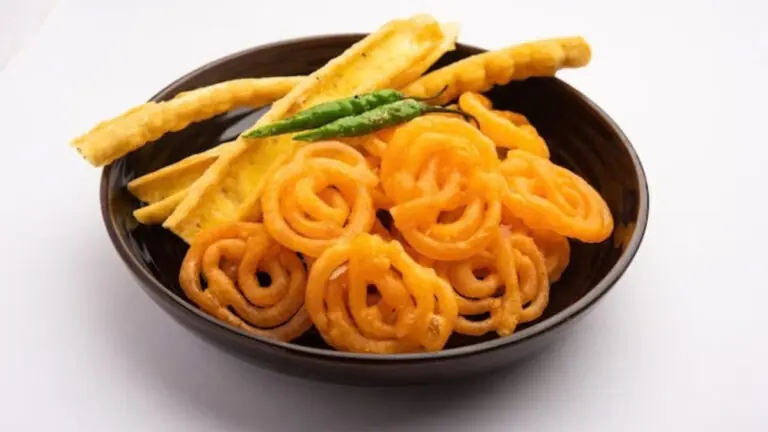
No Dussehra in Gujarat is complete without starting the morning with Fafda and Jalebi. Fafda is a long, crisp savoury ribbon crafted from gram flour (besan) seasoned with ajwain (carom seeds), black pepper, and a pinch of papad khar—an alkaline salt that reacts during frying to create a light, porous interior. The dough is kneaded firm, rolled into small balls, and dragged across a wooden board using the heel of the palm to form a thin ribbon before being flash-fried in hot oil. Its counterpart, Jalebi, is made from a fermented refined flour batter piped in tight, overlapping spirals directly into hot ghee, then soaked in a warm sugar syrup scented with saffron and cardamom.
Eating the two together provides a harmonious balance between salty, spiced crunch and hot, juicy sweetness. The pair is traditionally served with a side of warm besan kadhi, fried green chillies, and papaya sambharo (a raw, grated papaya salad tossed with mustard seeds and turmeric). Temperature control during syrup preparation is paramount: if the sugar crystallises or cools too quickly, the jalebi turns dull and soggy. Using a Prestige Induction Cooktop allows you to set precise digital wattage levels to hold the syrup at a gentle, steady warmth throughout the morning, ensuring every spiral absorbs syrup to its core.
Cholafali: Airy And Spiced Festive Pillows
Cholafali is a quintessential festive snack prepared during Navratri and Dussehra, celebrated for its cloud-like lightness and shattering crunch. Made from a combination of besan and urad dal flour, the dough is kneaded with water and oil, then vigorously beaten or pounded to incorporate air into the glutinous structure. Thin strips of dough are dropped into hot oil, where the trapped moisture expands rapidly, causing them to puff up into hollow, translucent pillows.
The secret to memorable cholafali lies in the signature spice dusting applied immediately after frying while the oil is still glistening on the surface. A blend of black salt, red chilli powder, and amchur (dry mango powder) coats the crispy exterior, delivering a sharp, tangy, and fiery punch that cuts through the rich lentil flavour. Achieving that dramatic expansion in the oil depends on rolling the dough paper-thin and maintaining high, even heat so the dough inflates before the exterior hardens.
Mathiya: The Savoury-Sweet Crisp

Mathiya is a traditional Gujarati cracker that marks the transition from Navratri into the festive autumn season. Unlike standard papads, Mathiya relies on moth dal flour (math flour) combined with a small portion of besan and urad dal flour. The dough is spiced with crushed peppercorns, ajwain, coarse chilli flakes, and a touch of sugar syrup, giving it a distinctive sweet-and-spicy character that sets it apart from everyday lentil wafers.
Preparing the specialised flour base at home requires breaking down tough, whole legumes into a silky powder. Utilising the high-torque motor of a Mixer Grinder makes pulverising whole moth dal effortless, yielding a finely sieved flour that forms a smooth, pliable dough. After resting, small portions are rolled out into thin discs and deep-fried over medium heat until they turn pale golden. As they cool, Mathiyas contract into crisp wafers with a firm, satisfying snap that store remarkably well in airtight jars.
Basundi And Puffed Puri: Rich Saffron Indulgence
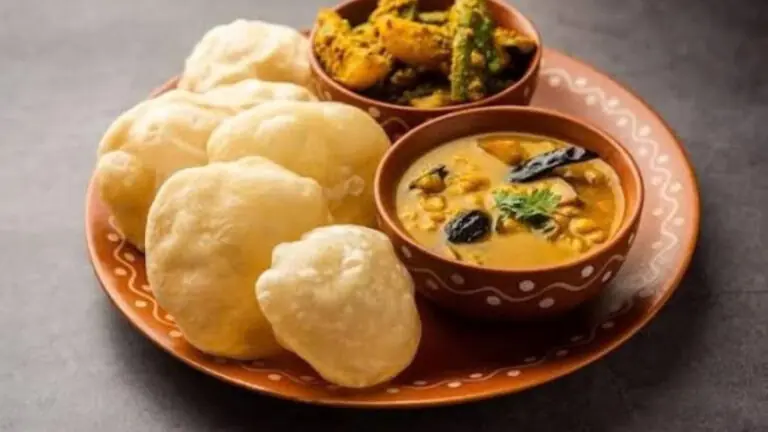
While fried farsan dominates the morning, the main festive afternoon meal features the luxurious combination of chilled Basundi and piping hot, golden Puris. Basundi is a rich dessert prepared by slow-simmering full-cream milk in a wide vessel until it reduces to nearly half its original volume. As the milk concentrates, its natural sugars caramelise gently, producing a creamy, pale gold liquid that is enriched with saffron, cardamom, nutmeg, and chopped almonds and pistachios.
Serving cold, velvety Basundi alongside hot, puffed whole-wheat Puris creates a delightful contrast in temperatures and textures. Reducing milk for extended periods without allowing the bottom layer to scorch demands patient heat management. Cooking the milk in an Electric Multi-Cooker keeps the liquid simmering gently at an automated, even temperature, preventing milk solids from sticking to the base while infusing every drop with aromatic saffron and cardamom.
Lilva Kachori: Harvest Fresh Golden Parcels
Dussehra coincides with the arrival of fresh winter crops, most notably lilva (fresh green tuvar or pigeon peas). Lilva Kachori takes these tender green pods and transforms them into a flaky, golden fried snack. The outer shell is made from refined flour dough rubbed with warm ghee to guarantee a short, crumbly pastry texture upon frying. The filling features coarsely crushed fresh green tuvar sautéed with ginger, green chillies, grated coconut, sesame seeds, lemon juice, and a touch of sugar.
Achieving the ideal texture for the filling requires coarsely crushing the fresh tuvar so it retains its structural bite rather than turning into a pasty puree. The filled pastry parcels are deep-fried slowly over medium-low heat, allowing the dough layers to cook through completely until golden brown. The result is a crisp, flaky crust that gives way to a hot, fragrant green centre bursting with natural winter sweetness.