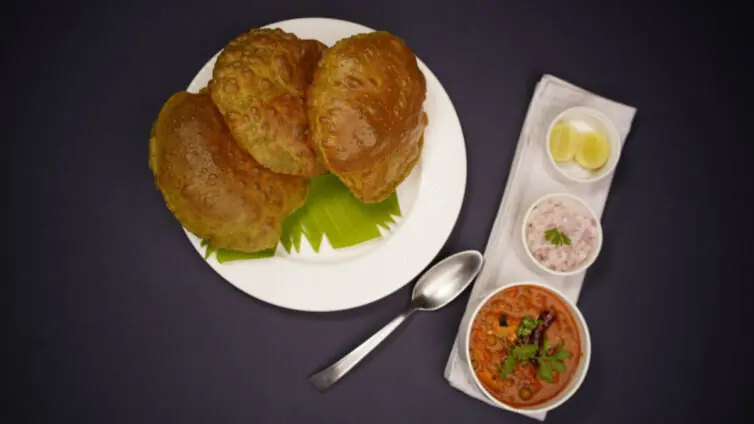
Kuttu Ki Puri is a deep-fried bread made from buckwheat flour, popular during Navratri fasting. It’s soft, slightly chewy, and pairs perfectly with a simple potato curry or plain yoghurt. Since kuttu flour behaves very differently from wheat flour, getting the dough right takes a little care. This also makes rolling it out a bit trickier than regular puri dough. Most people add boiled potato or arrowroot flour to the dough, which helps hold everything together while frying. The result is a puri that’s slightly darker in colour, with a nutty, earthy flavour that’s quite different from regular wheat puris.
Getting the dough right is really the only tricky part of this recipe. Kuttu flour needs a good binding agent, and mashed boiled potato works best for most people. The dough should be soft but not sticky, and it’s best rolled out between two sheets of parchment paper or plastic, since it can stick to a dry rolling board. Rolling it a little thicker than regular puris also helps, since thin kuttu puris tend to break apart while frying. Once you get the hang of the texture, it becomes a quick and fairly easy recipe to repeat through the nine days of fasting.
Kuttu Ki Puri is usually served with a simple, no-onion, no-garlic potato curry during Navratri, since most fasting rules avoid regular spices like turmeric, hing and regular salt. Rock salt, or sendha namak, is used instead of regular table salt to keep the dish fasting-friendly. It’s a dish many people grow up eating every Navratri, often alongside a bowl of yoghurt or a light pumpkin sabzi, making for a complete, satisfying fasting meal that doesn’t feel restrictive at all.