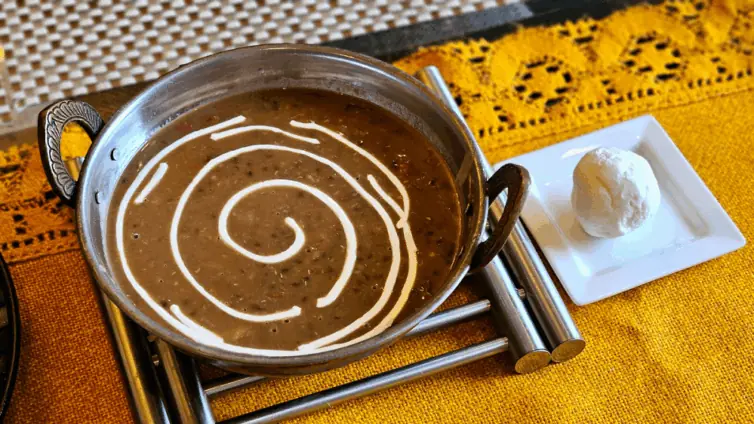
Langar dal is the black dal you get on a steel thali at the gurdwara, thick and creamy and mildly spiced, with a spoonful of ghee floating on top. Gurupurab is the day many homes try making it. An induction stove can manage it too. It takes a long, slow simmer, so keep a free afternoon and a ladle close by.
Time is the main ingredient, in fact. In a gurdwara kitchen, the dal sits in a huge pot for hours, and someone is always nearby with a long ladle. At home you won’t need that long, but the urad needs to be soaked overnight. It needs a pressure cooker, then a long and quiet simmer on the stove afterwards. Also, anything quicker gives you a dal that is soft but thin, without that creamy body.
The masala stays plain, with the onions being cooked till they turn deep gold, some tomatoes, a little ginger and garlic, green chilli, and ghee, more than you think you should use. Dishes from restaurant kitchens often add cream or butter to get a rich finish, but langar dal doesn’t need eit
Langar dal is the black dal you get on a steel thali at the gurdwara, thick and creamy and mildly spiced, with a spoonful of ghee floating on top. Gurupurab is the day many homes try making it. An induction stove can manage it too. It takes a long, slow simmer, so keep a free afternoon and a ladle close by.
Time is the main ingredient, in fact. In a gurdwara kitchen, the dal sits in a huge pot for hours, and someone is always nearby with a long ladle. At home you won’t need that long, but the urad needs to be soaked overnight. It needs a pressure cooker, then a long and quiet simmer on the stove afterwards. Also, anything quicker gives you a dal that is soft but thin, without that creamy body.
The masala stays plain, with the onions being cooked till they turn deep gold, some tomatoes, a little ginger and garlic, green chilli, and ghee, more than you think you should use. Dishes from restaurant kitchens often add cream or butter to get a rich finish, but langar dal doesn’t need either. Mashing a few spoonfuls of dal against the side of the pot as it simmers makes it thick all on its own.
An induction stove is perfectly fine for this, though it behaves a bit differently from a gas flame. Furthermore, it heats up quickly, so the dal can catch at the bottom if the setting is too high. Bring it to a boil on medium, then turn it down low and leave it. Also, if you hear it start to sizzle at the base, lift the pot off for a moment and stir.
Serve it with hot rotis, or with plain rice and a slice of raw onion. It tastes even better the next day, once it has had a night in the fridge to thicken. You can warm it with a splash of hot water and put a fresh spoon of ghee on top.