The day of Karwa Chauth usually begins before sunrise. Before the day-long fast starts, the fasting woman eats a meal called sargi. It is usually prepared by the mother-in-law and includes satiating foods meant to keep her nourished through the day, until the moon appears. Every household has its own version of what goes into a sargi thali, but a sweet dish almost always finds its way onto the plate, and feni is one of the most common choices across North Indian homes.
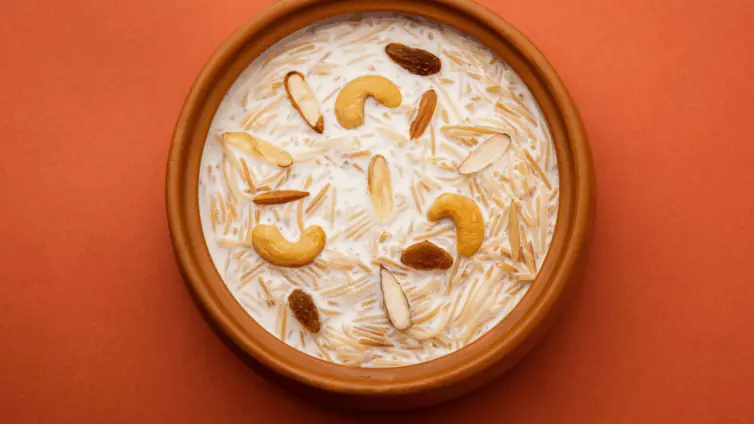
Feni is rich and comforting, making it a satiating start to the day before the fast. It is made with thin vermicelli roasted in ghee and then cooked in milk, with just a few simple ingredients, making it quick and easy to prepare. Some families add mawa or khoya for extra richness, whilst others keep it simple with just milk and sugar. Both ways, the dish ends up being soft, mildly sweet and easy to eat first thing in the morning.
The roasting of the vermicelli matters a lot more than people know, since under-roasted ver
The day of Karwa Chauth usually begins before sunrise. Before the day-long fast starts, the fasting woman eats a meal called sargi. It is usually prepared by the mother-in-law and includes satiating foods meant to keep her nourished through the day, until the moon appears. Every household has its own version of what goes into a sargi thali, but a sweet dish almost always finds its way onto the plate, and feni is one of the most common choices across North Indian homes.
Feni is rich and comforting, making it a satiating start to the day before the fast. It is made with thin vermicelli roasted in ghee and then cooked in milk, with just a few simple ingredients, making it quick and easy to prepare. Some families add mawa or khoya for extra richness, whilst others keep it simple with just milk and sugar. Both ways, the dish ends up being soft, mildly sweet and easy to eat first thing in the morning.
The roasting of the vermicelli matters a lot more than people know, since under-roasted vermicelli turns mushy and sticky once milk is added, while well-roasted vermicelli holds its texture and shape much better. It also helps to keep the milk at a low simmer instead of a hard boil, so the vermicelli cooks thoroughly and doesn’t catch at the bottom or turn lumpy.
Getting this balance right only takes a couple of tries, and once you do, it becomes a quick dish to make even in the sleepy, early hours before sunrise. Many households have their own small variations, whether it’s a few chopped nuts, some khoya, or a pinch of saffron, but the base of roasted vermicelli in milk stays the same everywhere.