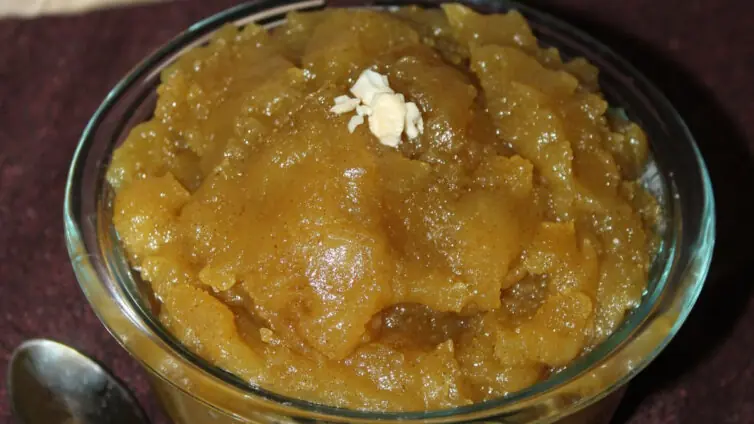
Most people who have eaten karah prasad at a gurdwara will tell you it tastes better there. Maybe it’s the big iron kadahs, maybe it’s the hands it comes from, or maybe it’s just that you eat it standing in a line with your palms cupped. The recipe is no secret, though, and it’s easy to make at home.
You need one cup of atta, one cup of ghee and one cup of sugar. The sugar goes into two cups of water to make a syrup. Some homes add a bit of cardamom and some don’t. The amount of ghee shocks first-timers. It looks like a pool in the pan, but the atta takes it all in, and the finished prasad is soft and glossy with a slightly grainy bite.
The roasting takes the longest. Add the atta to the melted ghee and stir. It starts off pale and wet-looking, then turns golden, then goes darker. At some point around the ten-minute mark, the smell changes and gets nutty, and you’ll notice it from the next room. Keep the flame low the whole time. Atta sticks to the bottom of a pan very fast
Most people who have eaten karah prasad at a gurdwara will tell you it tastes better there. Maybe it’s the big iron kadahs, maybe it’s the hands it comes from, or maybe it’s just that you eat it standing in a line with your palms cupped. The recipe is no secret, though, and it’s easy to make at home.
You need one cup of atta, one cup of ghee and one cup of sugar. The sugar goes into two cups of water to make a syrup. Some homes add a bit of cardamom and some don’t. The amount of ghee shocks first-timers. It looks like a pool in the pan, but the atta takes it all in, and the finished prasad is soft and glossy with a slightly grainy bite.
The roasting takes the longest. Add the atta to the melted ghee and stir. It starts off pale and wet-looking, then turns golden, then goes darker. At some point around the ten-minute mark, the smell changes and gets nutty, and you’ll notice it from the next room. Keep the flame low the whole time. Atta sticks to the bottom of a pan very fast, and a burnt taste doesn’t go away, however much sugar you add.
In a gurdwara kitchen, one vessel is used for all three ingredients, which is how the equal measure came about. One cup of each makes enough for about six people. If you’re cooking for more, just double everything and use a bigger pan.
The syrup is boiled separately and poured in while it’s still hot. Hold the pan a little away from you, because it splutters and throws up steam for a few seconds. After that, the mixture thickens quickly. When it starts leaving the sides of the pan, switch off the stove. Leave it on a minute longer, and the prasad turns dry.
Prasad is traditionally made with a covered head, clean hands and Waheguru recited softly, and many homes follow the same custom on Gurupurab. A steel plate goes out to neighbours and to relatives who could not make it to the gurdwara. A small portion is usually set aside first in front of the Guru Granth Sahib. It is best eaten the same day, in small helpings, while it is still warm.