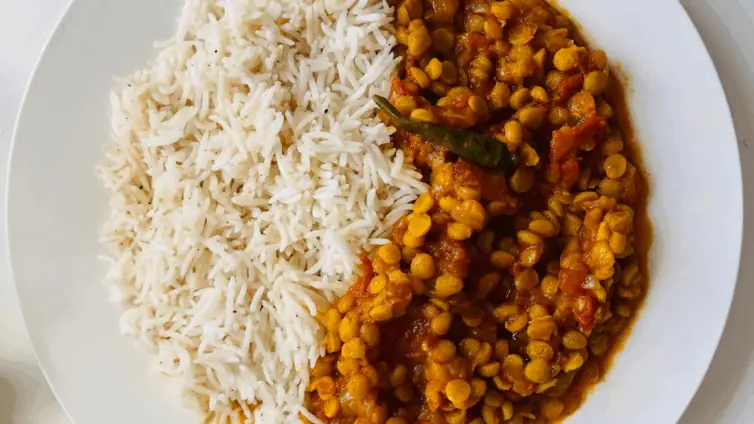
Made from split Bengal gram (chana dal), this dish differs from the thinner, everyday dals of North India, with the characteristic sweet-savoury flavour that defines Bengali cuisine. This dish is often reserved for festive meals, pujo bhog and celebratory feasts rather than day-to-day cooking. The preparation starts with soaking the dal to soften it, followed by pressure cooking with salt and turmeric until tender but not losing its shape. Then the whole spices like cumin seeds, dried red chillies, a pinch of hing and bay leaves are bloomed in ghee, releasing a fragrance that is unique to the dish. After that, some sliced coconut that is lightly fried until it turns light golden is folded in along with raisins that impart the Bengali cholar dal its gentle bursts of sweetness against the savoury notes.
Garam masala, drizzled towards the end of the cooking, adds an additional depth without overwhelming the dal’s natural nuttiness, and green chillies and the ginger paste add warmt
Made from split Bengal gram (chana dal), this dish differs from the thinner, everyday dals of North India, with the characteristic sweet-savoury flavour that defines Bengali cuisine. This dish is often reserved for festive meals, pujo bhog and celebratory feasts rather than day-to-day cooking. The preparation starts with soaking the dal to soften it, followed by pressure cooking with salt and turmeric until tender but not losing its shape. Then the whole spices like cumin seeds, dried red chillies, a pinch of hing and bay leaves are bloomed in ghee, releasing a fragrance that is unique to the dish. After that, some sliced coconut that is lightly fried until it turns light golden is folded in along with raisins that impart the Bengali cholar dal its gentle bursts of sweetness against the savoury notes.
Garam masala, drizzled towards the end of the cooking, adds an additional depth without overwhelming the dal’s natural nuttiness, and green chillies and the ginger paste add warmth to it. At the end, it is finished with a splash of ghee, which enhances the aroma further before serving. Cholar dal is traditionally eaten with luchi (fried puris), but it also complements steamed rice beautifully. This recipe is passed down through generations and represents more than just a meal; it is an integral part of Bengali food heritage. The beauty of the dish lies in its balance and simplicity. It is a fantastic choice for gatherings as it can be made ahead of time, with its flavours deepening as it rests
Read More