

Copyright © 2025, My Kitchen Diaries .All Rights Reserved


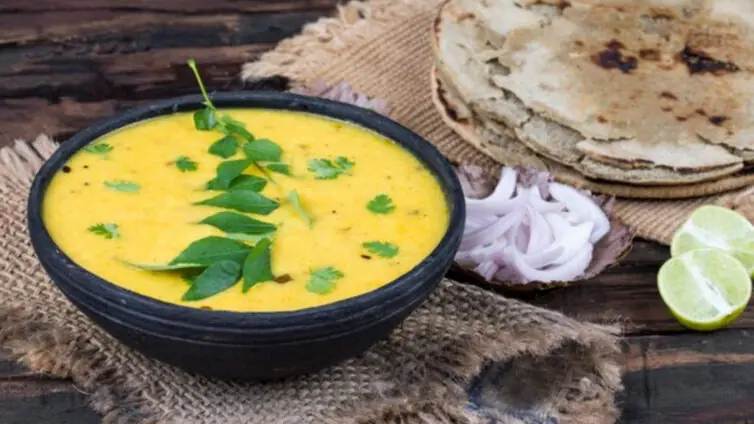
Traditional Gujarati kadhi is the ultimate comfort food, usually served alongside a warm plate of khichdi or a simple vegetable stir fry. Unlike the thick, onion-heavy varieties found in northern regions, the Gujarati version is thin, glossy, and completely smooth. It relies on a very specific balance of flavours, pairing the sharp sourness of fermented yoghurt with the gentle sweetness of jaggery. Getting this balance right is an art form passed down through generations, but translating that old school magic to a modern kitchen comes with its own set of challenges.
The crucial hurdle when making kadhi today is the induction stove. Yoghurt is incredibly temperamental when exposed to heat. The dairy proteins are fragile, and if they get shocked by a sudden temperature spike, they instantly clump together, separating from the water and leaving you with a watery, curdled mess. Induction cooktops work via electromagnetic currents that heat the bottom of your pan almost instantly. There is
Read MoreWhisk the yoghurt and gram flour together in a bowl until absolutely smooth with no lumps remaining.
Gradually pour in the water while continuing to whisk, forming a thin and uniform liquid base.
Stir the ginger-green chilli paste, jaggery, and a pinch of asafoetida directly into the liquid mixture.
Place your induction-compatible pan on the cooktop and select a low power setting, around 500 watts. Pour in the yoghurt mixture.
Stir the mixture continuously in one direction as it warms up. Do not leave the stove during this period.
Keep stirring until the liquid gently comes to its first boil, which takes about eight to ten minutes on a low setting. Once it boils, add the salt.
Lower the power further to around 200 watts and let the kadhi simmer for another five to seven minutes so the raw taste of the flour disappears.
In a separate small induction pan, heat the ghee on a low manual setting. Add the mustard seeds, cumin seeds, fenugreek seeds, cloves, and cinnamon.
When the seeds begin to splutter, drop in the curry leaves and turn off the induction stove immediately to avoid scorching the spices.
Pour this aromatic tempering directly into the simmering kadhi, garnish with fresh coriander, and serve hot with rice.
This happens when the heat is too high or if you stop stirring before the mixture reaches a boil. Induction cooks faster than gas, so you must use low manual wattage.
Yes, homemade buttermilk works perfectly. Just adjust the water quantity so the consistency does not become too watery.
If it splits slightly, take it off the heat and blend it quickly with a hand blender, or whisk in a teaspoon of gram flour slurry to bind it back together.
Fenugreek seeds can cause bitterness if they burn during the tempering process. Keep the wattage low when frying them.
Yes, sugar works fine, but jaggery provides that authentic, deep, traditional sweetness typical of Gujarati homes.
Copyright © 2025, My Kitchen Diaries .All Rights Reserved