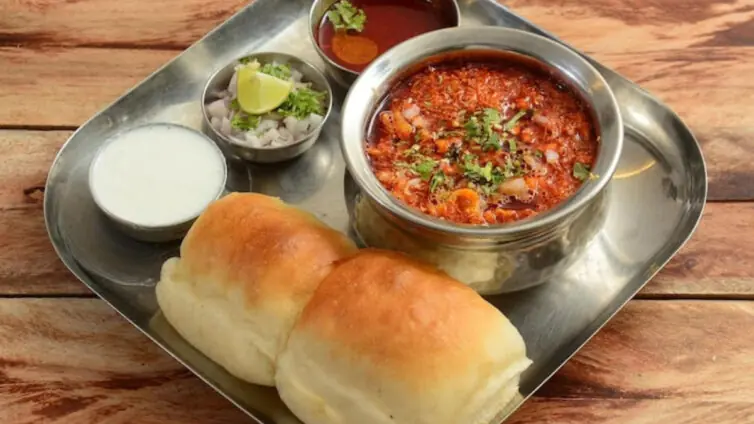
Misal pav is one of those dishes that completely wakes up your palate. Originating from Maharashtra, it is essentially a very spicy, watery curry made with sprouted moth beans, known as matki. What makes misal so special is the brilliant contrast of textures. You have the soft beans, the fiery red broth called kat or tarri, and the unbelievable crunch of the mixed farsan on top. It is loud, bold, and unapologetically spicy.
Making it at home feels incredibly rewarding. You start by making a deeply roasted spice paste using dry coconut, onions, and garlic. This paste forms the base of the tarri, giving it that signature dark red colour and a rich layer of oil floating on top. While it might look intimidating, that layer of spicy oil is exactly what you want to dip your soft pav into. The heat is easily balanced out by squeezing fresh lemon over the bowl and eating it with a side of chopped raw onions.
The assembly of the dish is just as important as the cooking. You do not just serve it
Misal pav is one of those dishes that completely wakes up your palate. Originating from Maharashtra, it is essentially a very spicy, watery curry made with sprouted moth beans, known as matki. What makes misal so special is the brilliant contrast of textures. You have the soft beans, the fiery red broth called kat or tarri, and the unbelievable crunch of the mixed farsan on top. It is loud, bold, and unapologetically spicy.
Making it at home feels incredibly rewarding. You start by making a deeply roasted spice paste using dry coconut, onions, and garlic. This paste forms the base of the tarri, giving it that signature dark red colour and a rich layer of oil floating on top. While it might look intimidating, that layer of spicy oil is exactly what you want to dip your soft pav into. The heat is easily balanced out by squeezing fresh lemon over the bowl and eating it with a side of chopped raw onions.
The assembly of the dish is just as important as the cooking. You do not just serve it in a bowl like a regular curry. You start with a ladle of the cooked sprouts, pour the spicy tarri generously over them, and then load it up with handfuls of crispy farsan, chopped onions, and fresh coriander. It is messy to eat, makes your nose run a little, and is genuinely one of the most satisfying meals you can make in your own kitchen.
Read More