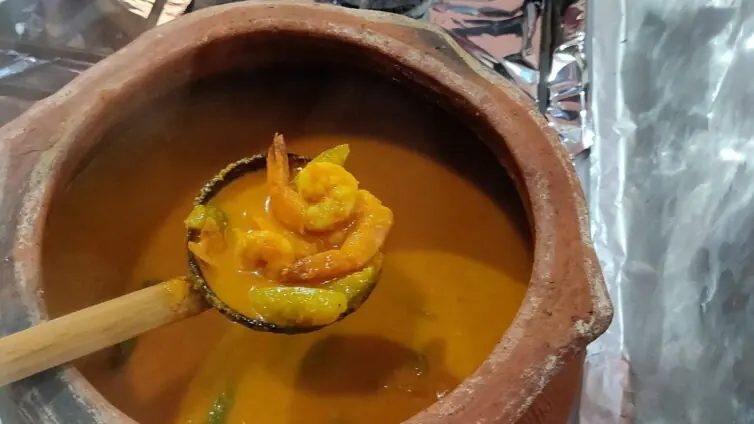
Whenever one is on the lookout for yummy seafood, it is the coastal areas that come to mind first. Be it the backwaters of Kerala or the sandy beaches of Goa, the abundance of seafood paves the way for delightful delicacies made with fish, prawns, and more. Each region boasts their own seafood fare, and the Goan cuisine is one such cuisine which seems incomplete without seafood delicacies. While chicken xacuti and pork vindaloo still charm locals and tourists, nothing can beat a rich and creamy Goan prawn curry.
The spicy and sour tastes are most likely inspired by their Portuguese history, and each household has its unique recipe for Goan prawn curry. The masala mixture for the prawn curry is never cooked completely. A Goan prawn curry is typically defined as one that is free of lumps and granules. Such curry recipes generally include coconut in the paste when it is ground; some recipes skip it and use only coconut milk, while others ask for both. It is a question of personal choice
Whenever one is on the lookout for yummy seafood, it is the coastal areas that come to mind first. Be it the backwaters of Kerala or the sandy beaches of Goa, the abundance of seafood paves the way for delightful delicacies made with fish, prawns, and more. Each region boasts their own seafood fare, and the Goan cuisine is one such cuisine which seems incomplete without seafood delicacies. While chicken xacuti and pork vindaloo still charm locals and tourists, nothing can beat a rich and creamy Goan prawn curry.
The spicy and sour tastes are most likely inspired by their Portuguese history, and each household has its unique recipe for Goan prawn curry. The masala mixture for the prawn curry is never cooked completely. A Goan prawn curry is typically defined as one that is free of lumps and granules. Such curry recipes generally include coconut in the paste when it is ground; some recipes skip it and use only coconut milk, while others ask for both. It is a question of personal choice, but coconut is always incorporated in Goan prawn curry.
Another key tip is to prevent overcooking the prawns, or they may sometimes become chewy and rubbery when cooked. So, the reason is that prawns barely need 4-6 minutes to cook, depending on the size you choose for your Goan prawn curry dish. Plus, the recipe is very easy to make and makes up for a rewarding dinner feast, especially in the summer. Follow this simple recipe and cook this up for your family and friends!