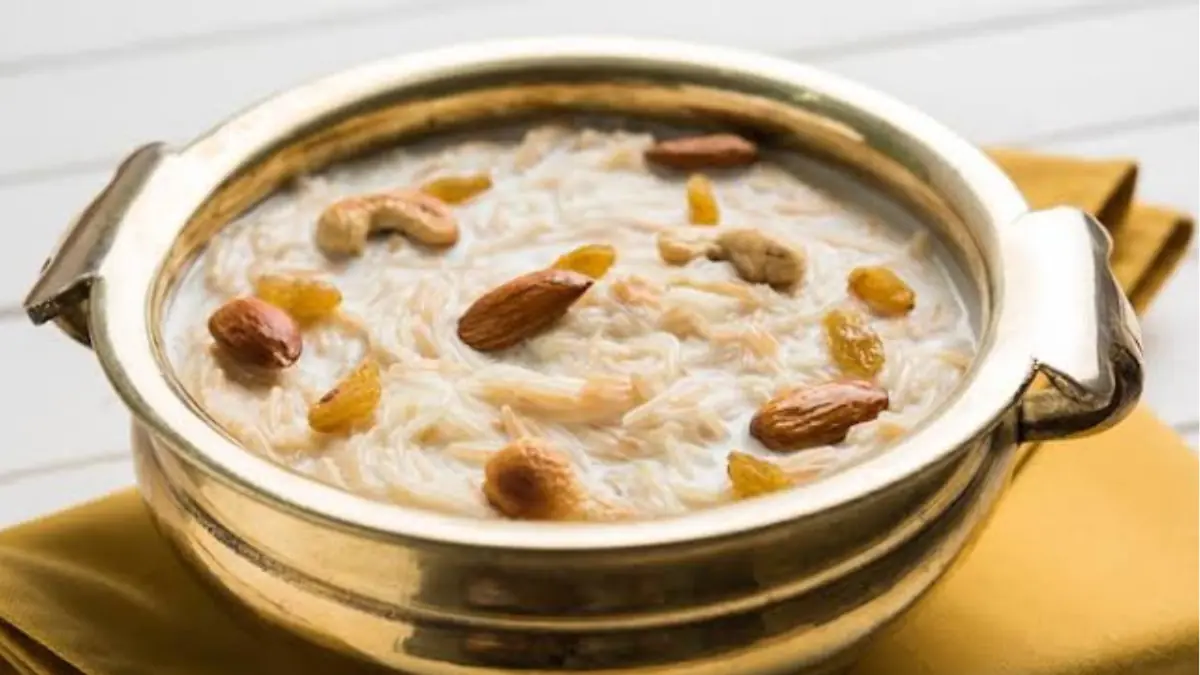
Palada Payasam has always been at the centre of Kerala feasts, especially during the Onam sadhya. Unlike other payasams that rely on jaggery, coconut milk, or added spices, palada is kept simple yet indulgent. The making itself is seen as a ritual, because the milk must be simmered gently for over an hour, reducing slowly, and stirred continuously to avoid burning. This slow process caramelises the sugar slightly and creates that pale pink colour that is loved in this payasam.
Traditionally, rice ada is made fresh by steaming thin sheets of ground rice batter and cutting them into tiny squares. Nowadays, ready-made ada packets are used to save time, but the essence is still in the careful cooking of the milk and ada together. Many families believe the longer you allow the milk to thicken, the better the taste and creaminess. It is also one of the recipes where you don’t overload with too many ingredients, because the real taste lies in the combination of milk, ada, and sugar, balance
Palada Payasam has always been at the centre of Kerala feasts, especially during the Onam sadhya. Unlike other payasams that rely on jaggery, coconut milk, or added spices, palada is kept simple yet indulgent. The making itself is seen as a ritual, because the milk must be simmered gently for over an hour, reducing slowly, and stirred continuously to avoid burning. This slow process caramelises the sugar slightly and creates that pale pink colour that is loved in this payasam.
Traditionally, rice ada is made fresh by steaming thin sheets of ground rice batter and cutting them into tiny squares. Nowadays, ready-made ada packets are used to save time, but the essence is still in the careful cooking of the milk and ada together. Many families believe the longer you allow the milk to thicken, the better the taste and creaminess. It is also one of the recipes where you don’t overload with too many ingredients, because the real taste lies in the combination of milk, ada, and sugar, balanced with just a touch of ghee or cardamom if preferred.
Served warm or chilled, Palada Payasam makes its presence on almost every festive banana leaf meal in Kerala. The recipe not only connects generations but also keeps alive a certain discipline of cooking with patience. Unlike quick sweets, it is not a dish for rushed cooking but for special moments when you want to serve something meaningful.
Read More