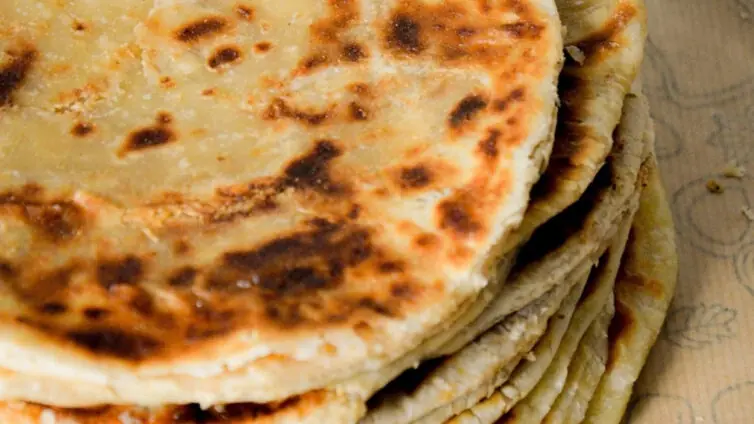
Puran Polis’ filling is traditionally made from chana dal cooked until soft, then mashed with jaggery and a touch of cardamom or nutmeg for a warm aroma. Wrap this mixture in a soft dough made with wheat flour and a little oil. Then roll it out gently and cook it on a hot griddle until golden and lightly blistered. What you get at the end is a flatbread that is soft, faintly sweet and layered with texture in every bite. Incase, your filling turns out too wet, you can cook it down further on low heat.
Some families add saffron, nutmeg or fennel for extra fragrance, while others keep it simple with just cardamom and jaggery. It is traditionally served alongside the family’s other festive dishes rather than as a standalone item and is often paired with a generous drizzle of ghee or a glass of warm milk. Also, if you have leftover puran, it freezes well and can be used later for stuffed parathas or simply eaten with a spoonful of ghee.
Beyond its taste, Puran Poli is also an im
Puran Polis’ filling is traditionally made from chana dal cooked until soft, then mashed with jaggery and a touch of cardamom or nutmeg for a warm aroma. Wrap this mixture in a soft dough made with wheat flour and a little oil. Then roll it out gently and cook it on a hot griddle until golden and lightly blistered. What you get at the end is a flatbread that is soft, faintly sweet and layered with texture in every bite. Incase, your filling turns out too wet, you can cook it down further on low heat.
Some families add saffron, nutmeg or fennel for extra fragrance, while others keep it simple with just cardamom and jaggery. It is traditionally served alongside the family’s other festive dishes rather than as a standalone item and is often paired with a generous drizzle of ghee or a glass of warm milk. Also, if you have leftover puran, it freezes well and can be used later for stuffed parathas or simply eaten with a spoonful of ghee.
Beyond its taste, Puran Poli is also an important part of festive celebrations. It is considered an auspicious offering and is often served as the centrepiece of a festive thali. Since both the dough and the filling can be prepared a day ahead, it’s a dish that lends itself well to planning in advance. This allows you to focus on the rolling and cooking when the time comes to serve it fresh and warm.
Read More