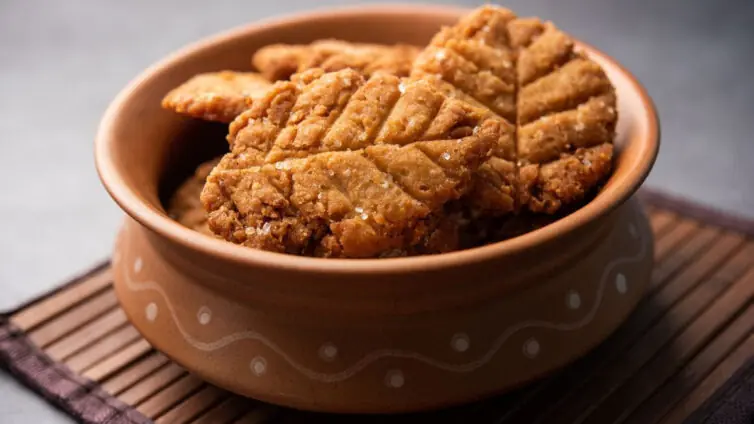
Thekua is the sweet that runs the Chhath kitchen. It is made from jaggery, ghee and wheat flour, shaped by hand and fried on a low flame until it turns a dark, even brown. One batch fills a tin and lasts for weeks. You need to set aside for about an hour and a half, including a short rest for the dough. Thekua often finds its way far beyond home. Daughters living in other cities ask their families to send some, sons carry a box back after Chhath, and relatives abroad receive a parcel every year.
Thekua needs just a few basic ingredients: wheat flour, jaggery and ghee. Some families add grated coconut, fennel seeds or cardamom, depending on their preference. The sweetness and texture can vary from one kitchen to another. While some like their thekua sweet, others use less jaggery and a little more ghee for a richer, crumbly texture. There’s no single way to make it; both versions are equally familiar in Bihari homes.
It is not a soft sweet, as thekua is dense and dry, with a crunch,
Thekua is the sweet that runs the Chhath kitchen. It is made from jaggery, ghee and wheat flour, shaped by hand and fried on a low flame until it turns a dark, even brown. One batch fills a tin and lasts for weeks. You need to set aside for about an hour and a half, including a short rest for the dough. Thekua often finds its way far beyond home. Daughters living in other cities ask their families to send some, sons carry a box back after Chhath, and relatives abroad receive a parcel every year.
Thekua needs just a few basic ingredients: wheat flour, jaggery and ghee. Some families add grated coconut, fennel seeds or cardamom, depending on their preference. The sweetness and texture can vary from one kitchen to another. While some like their thekua sweet, others use less jaggery and a little more ghee for a richer, crumbly texture. There’s no single way to make it; both versions are equally familiar in Bihari homes.
It is not a soft sweet, as thekua is dense and dry, with a crunch, and a piece goes down well with strong tea. People who are used to syrupy mithai sometimes find it plain on the first bite, but most come around by the second piece.
Getting the dough consistency right takes a little practice. It should be firm enough to hold its shape without cracking, and most people get the hang of it after a few attempts. Authentically, thekua is shaped using a wooden mould with a carved leaf pattern. If you don’t have one, you can cut the dough into diamonds and press a few lines on top with a fork. Fry the pieces over a low flame, turning them occasionally so they cook evenly and turn crisp.
Stored in an airtight steel tin in a cool, dry place, it can stay crisp for three weeks or longer, making it easy to pack and send.