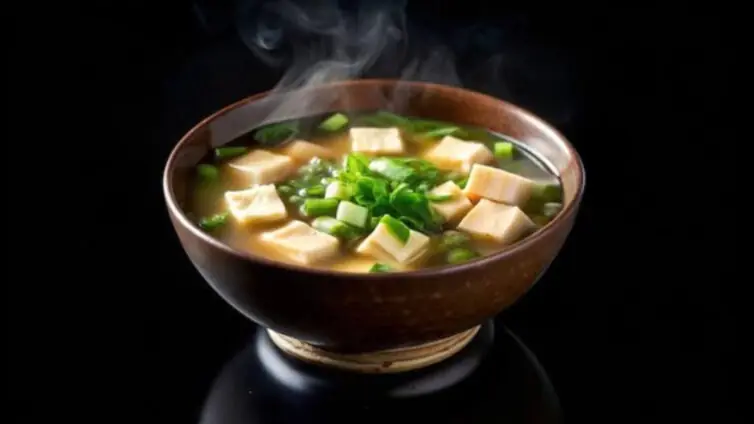
Making authentic miso soup at home is surprisingly fast and incredibly rewarding. The foundation of this classic dish is dashi, a traditional Japanese broth that provides an essential layer of umami. While you might be tempted to use instant dashi granules, taking a few extra minutes to steep kombu, which is dried kelp, and bonito flakes creates a much cleaner and more delicate flavour. This homemade base elevates the entire experience and requires only warm water and a little patience.
Once your dashi is ready, the rest of the cooking happens in a flash. The defining ingredient is miso paste, a fermented soybean paste that comes in various types. White miso offers a sweeter and milder taste while red miso brings a saltier and more robust profile. You can even mix them to find your perfect balance. The most critical rule when making this soup is to never let the broth boil after adding the miso. Boiling destroys the beneficial probiotics and alters the subtle flavour of the paste, maki
Making authentic miso soup at home is surprisingly fast and incredibly rewarding. The foundation of this classic dish is dashi, a traditional Japanese broth that provides an essential layer of umami. While you might be tempted to use instant dashi granules, taking a few extra minutes to steep kombu, which is dried kelp, and bonito flakes creates a much cleaner and more delicate flavour. This homemade base elevates the entire experience and requires only warm water and a little patience.
Once your dashi is ready, the rest of the cooking happens in a flash. The defining ingredient is miso paste, a fermented soybean paste that comes in various types. White miso offers a sweeter and milder taste while red miso brings a saltier and more robust profile. You can even mix them to find your perfect balance. The most critical rule when making this soup is to never let the broth boil after adding the miso. Boiling destroys the beneficial probiotics and alters the subtle flavour of the paste, making it taste flat and grainy.
The additions to the soup can be as simple or as elaborate as you like. Silken tofu cubes and thinly sliced spring onions are the most traditional choices, offering a beautiful contrast in texture. Some people enjoy adding wakame seaweed or sliced mushrooms for extra earthiness. It is a highly adaptable recipe that forms the backbone of a comforting meal, providing warmth and nourishment with very little effort.
Read More