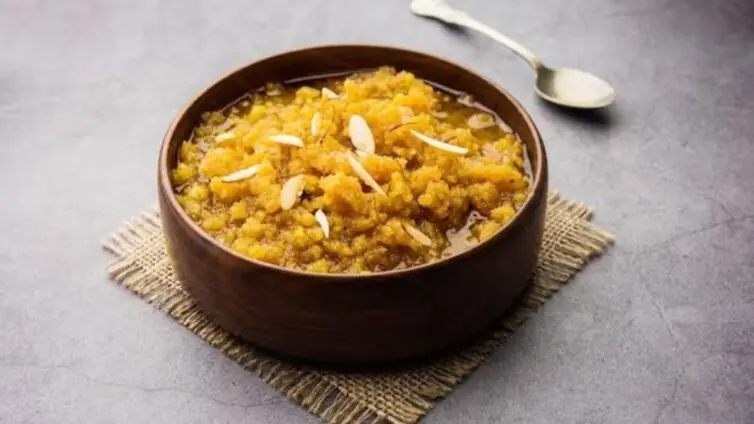
If there is one dessert that demands your complete attention and repays you with absolute perfection, it is moong dal halwa. Making this sweet is a genuine labour of love. You cannot rush it, you cannot step away from the stove, and you certainly cannot skimp on the ghee. In Indian homes, the process of making this halwa is almost ceremonial. The scent of roasted lentils and clarified butter slowly fills the house, signaling to everyone that something very special is being prepared.
The magic of this dish lies entirely in the roasting process. It starts with soaking the lentils, grinding them into a coarse paste, and then introducing that paste to a pan of hot ghee. At first, the mixture clumps up and feels incredibly heavy to stir. It tests your patience and your arm strength. But as you keep roasting it over a low flame, something beautiful happens. The paste breaks down, turns a rich golden brown, and transforms into a crumbly texture that smells incredibly nutty. That transformatio
If there is one dessert that demands your complete attention and repays you with absolute perfection, it is moong dal halwa. Making this sweet is a genuine labour of love. You cannot rush it, you cannot step away from the stove, and you certainly cannot skimp on the ghee. In Indian homes, the process of making this halwa is almost ceremonial. The scent of roasted lentils and clarified butter slowly fills the house, signaling to everyone that something very special is being prepared.
The magic of this dish lies entirely in the roasting process. It starts with soaking the lentils, grinding them into a coarse paste, and then introducing that paste to a pan of hot ghee. At first, the mixture clumps up and feels incredibly heavy to stir. It tests your patience and your arm strength. But as you keep roasting it over a low flame, something beautiful happens. The paste breaks down, turns a rich golden brown, and transforms into a crumbly texture that smells incredibly nutty. That transformation is the absolute soul of a good moong dal halwa.
While modern shortcuts exist, true enthusiasts know that slow cooking is non-negotiable. Adding milk and a saffron infused sugar syrup at the very end plumps up the roasted lentil grains, giving the halwa its signature soft and melt-in-the-mouth consistency. It is an honest, rich, and deeply comforting dessert that warms you up from the inside. When you serve this to family or guests, they are not just eating a sweet treat. They are tasting the time, effort, and care you put into every single stir.