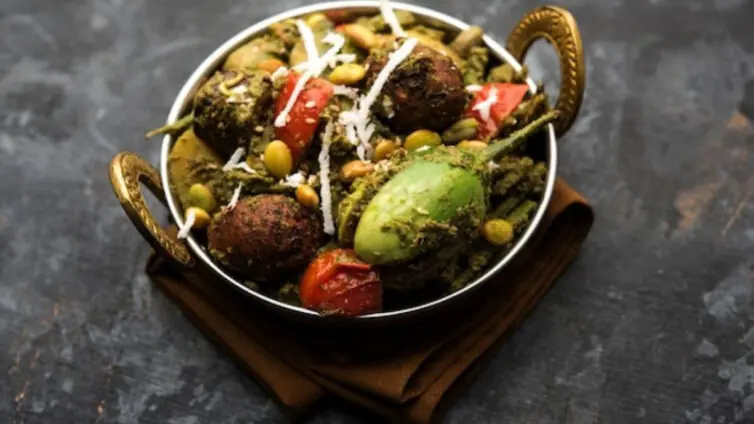
Undhiyu gets its name from the Gujarati word ‘undhu’, which means upside down. Traditionally, farmers cooked this dish in earthen pots buried underground and covered with hot coals. This slow-cooking method allowed the flavours of the winter harvest to blend perfectly. For the Jain community, the recipe is carefully adapted to follow dietary rules. This means no onions, garlic, potatoes, or yams are used. Instead, raw bananas and extra portions of seasonal beans provide the bulk and texture of the dish.
The heart of a good Undhiyu lies in the ‘Muthias’ or fenugreek dumplings. These are small, spiced balls made from chickpea flour and fresh fenugreek leaves. They are fried until golden and then simmered with the vegetables. Another essential part is the green masala paste. This is made using a large amount of fresh coriander, grated coconut, and green chillies. In a Jain household, this paste is the main source of flavour since no ginger or garlic can be added.
M
Undhiyu gets its name from the Gujarati word ‘undhu’, which means upside down. Traditionally, farmers cooked this dish in earthen pots buried underground and covered with hot coals. This slow-cooking method allowed the flavours of the winter harvest to blend perfectly. For the Jain community, the recipe is carefully adapted to follow dietary rules. This means no onions, garlic, potatoes, or yams are used. Instead, raw bananas and extra portions of seasonal beans provide the bulk and texture of the dish.
The heart of a good Undhiyu lies in the ‘Muthias’ or fenugreek dumplings. These are small, spiced balls made from chickpea flour and fresh fenugreek leaves. They are fried until golden and then simmered with the vegetables. Another essential part is the green masala paste. This is made using a large amount of fresh coriander, grated coconut, and green chillies. In a Jain household, this paste is the main source of flavour since no ginger or garlic can be added.
Making Undhiyu is often a communal activity. It requires a lot of preparation, such as stringing the beans and stuffing the vegetables. In modern kitchens, a pressure cooker or a heavy-bottomed pan is used to recreate the slow-cooked feel. The final result is a complex dish that is sweet, spicy, and tangy all at once. It is usually served with hot puris and shrikhand. It is a true celebration of the winter season and Gujarati culture.
Read More