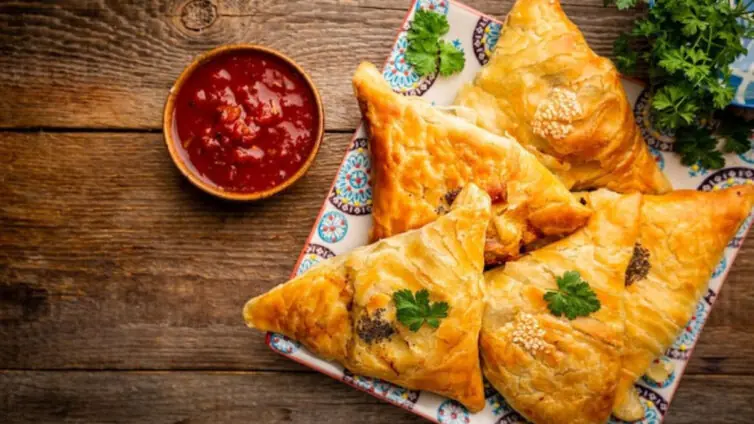
The samosa has a fascinating culinary journey that traces back to the Middle East and Central Asia, where baked pastries filled with meat and nuts were enjoyed by travelling merchants. As the recipe travelled across trade routes and entered the subcontinent, it evolved dramatically. The most famous iteration is undoubtedly the Punjabi samosa, characterised by its thick, flaky pastry shell and a robust, earthy filling of mashed potatoes, green peas, and whole spices. It became a staple at tea stalls, railway stations, and family gatherings, universally loved for its comforting warmth and satisfying crunch. Traditionally, achieving that iconic blistered crust requires submerging the pastry in vats of hot oil, which deters many from enjoying them frequently at home.
Embracing modern cooking technology allows us to recreate this nostalgic snack in a much healthier way. The air fryer works by circulating superheated air rapidly around the food, mimicking the results of deep frying but requi
The samosa has a fascinating culinary journey that traces back to the Middle East and Central Asia, where baked pastries filled with meat and nuts were enjoyed by travelling merchants. As the recipe travelled across trade routes and entered the subcontinent, it evolved dramatically. The most famous iteration is undoubtedly the Punjabi samosa, characterised by its thick, flaky pastry shell and a robust, earthy filling of mashed potatoes, green peas, and whole spices. It became a staple at tea stalls, railway stations, and family gatherings, universally loved for its comforting warmth and satisfying crunch. Traditionally, achieving that iconic blistered crust requires submerging the pastry in vats of hot oil, which deters many from enjoying them frequently at home.
Embracing modern cooking technology allows us to recreate this nostalgic snack in a much healthier way. The air fryer works by circulating superheated air rapidly around the food, mimicking the results of deep frying but requiring merely a light brushing of oil. The secret to a perfect air-fried samosa lies in the dough. Incorporating a small amount of fat, known as moyan, directly into the flour before kneading ensures the pastry turns out incredibly flaky rather than tough and chewy. Resting the dough is equally critical as it allows the gluten to relax, making it easier to roll out and shape into the classic cones.
The filling remains entirely traditional, relying on crushed coriander seeds, cumin, and dry mango powder to deliver that authentic street food tang. Once stuffed and sealed securely, the samosas are air-fried until they develop a beautiful golden crust. The result is a wonderfully crisp exterior that shatters upon the first bite, revealing a steaming, spiced potato centre. Served alongside a fresh mint and coriander chutney, these healthier samosas prove that you can enjoy the deep, comforting flavours of heritage recipes while maintaining a balanced diet.