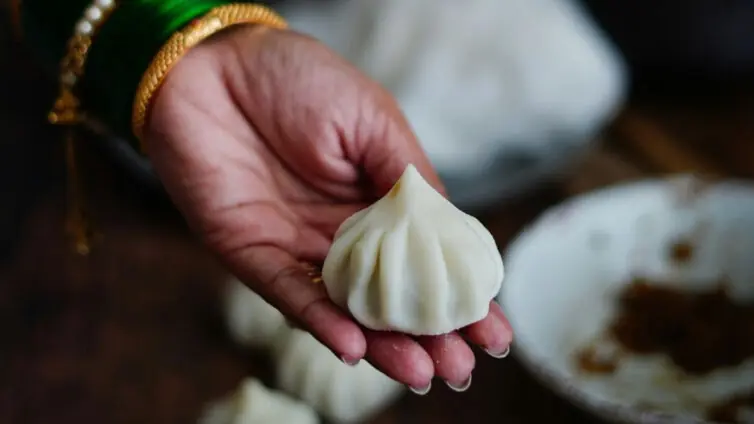
Kozhukattai is a cherished part of South indian kitchens, especially during Ganesh Chaturthi, when it is offered to Lord Ganesha as his favourite sweet. Kozhukattai maintains a balance of a soft, chewy exterior made of rice flour dough and its molten, aromatic centre made of a rich filling of jaggery, cardamom, and fresh coconut. Unlike many festive sweets that involve deep-frying or long hours of cooking, kozhukattai is simply steamed. This makes it light and easy to digest, making it a good choice for fasting and festive meals that favour simple, sattvic food.
The rice flour dough comes together quickly with just hot water and a touch of oil, while the filling is a simmer of grated coconut and jaggery until it turns glossy and aromatic. The real skill in this recipe lies in shaping the kozhukattai. The dough is shaped into a pouch with pleats, filled with the sweet filling, and sealed at the top to form a neat peak. Although it takes a little practice, even imperfectly pleated kozh
Kozhukattai is a cherished part of South indian kitchens, especially during Ganesh Chaturthi, when it is offered to Lord Ganesha as his favourite sweet. Kozhukattai maintains a balance of a soft, chewy exterior made of rice flour dough and its molten, aromatic centre made of a rich filling of jaggery, cardamom, and fresh coconut. Unlike many festive sweets that involve deep-frying or long hours of cooking, kozhukattai is simply steamed. This makes it light and easy to digest, making it a good choice for fasting and festive meals that favour simple, sattvic food.
The rice flour dough comes together quickly with just hot water and a touch of oil, while the filling is a simmer of grated coconut and jaggery until it turns glossy and aromatic. The real skill in this recipe lies in shaping the kozhukattai. The dough is shaped into a pouch with pleats, filled with the sweet filling, and sealed at the top to form a neat peak. Although it takes a little practice, even imperfectly pleated kozhukattai taste just as good. Also, this recipe works well for those following Jain or satvik dietary preferences, since no onion, garlic or root vegetables are used at any stage.
You can serve kozhukattai warm, fresh from the steamer, with a drizzle of ghee on top. Furthermore, they also make a lovely addition to a festive thali alongside other traditional offerings.